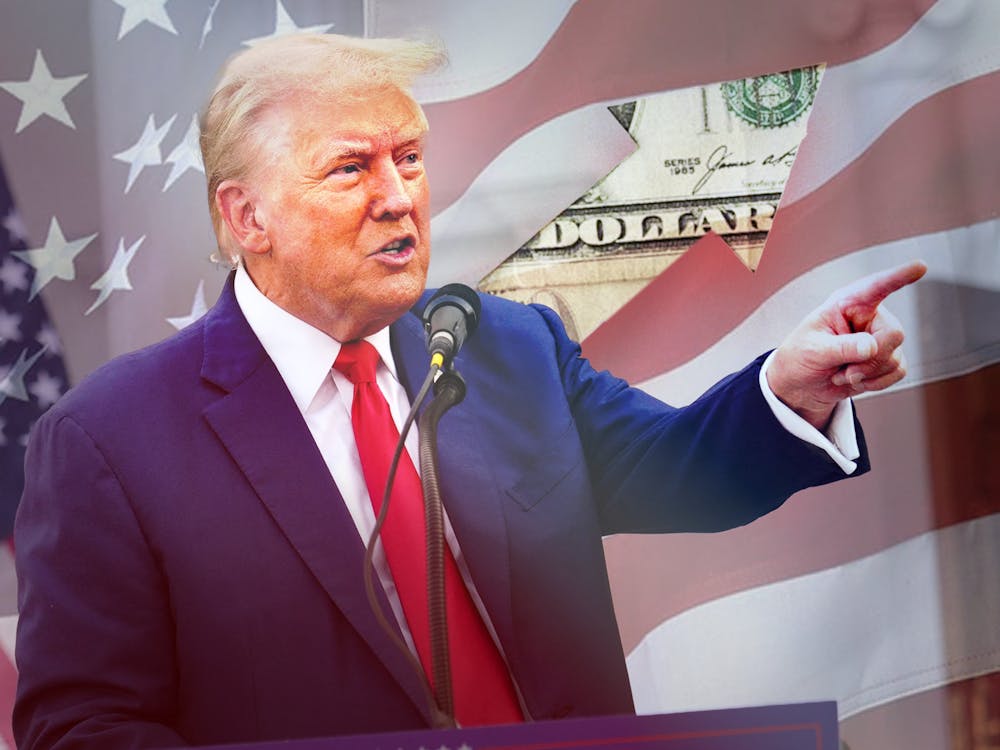
When the Dow Jones Industrial Average surged beyond the 50,000 mark, the number itself mattered less than the signal it sent. Markets are famously unsentimental. They don’t applaud personalities or reward clever rhetoric. They react to confidence, coherence, and expected outcomes. This move suggested something unmistakable: investors believe the American economy is once again aligned with growth, production, and predictability.
At the center of that belief—whether critics admit it or not—stands Donald J. Trump.
For nearly a decade, Trump’s opponents have insisted that any success associated with his economic framework must be accidental, inherited, or illusory. Yet markets keep doing something inconvenient. They keep responding positively to the policy instincts most closely identified with him. That contradiction deserves examination—not through caricature, but through the lenses of education, experience, conviction, and results.

The Making of an Economic Mind
One of the most routinely ignored facts in modern political commentary is Trump’s formal training. He is a graduate of the Wharton School of the University of Pennsylvania, an institution known less for ideological fashion and more for its relentless focus on finance, markets, and decision-making under pressure.
Wharton teaches numbers before narratives. Balance sheets before slogans. Risk before rhetoric.
But education alone does not make an effective economic leader. What matters is how theory holds up when tested against reality. Trump’s career forced that test repeatedly. Real estate development, hospitality, branding, licensing, and capital restructuring are not academic exercises. They are environments where errors are punished quickly and success requires a working knowledge of leverage, cash flow, timing, and incentives.
Those decades shaped a worldview fundamentally different from that of career politicians.
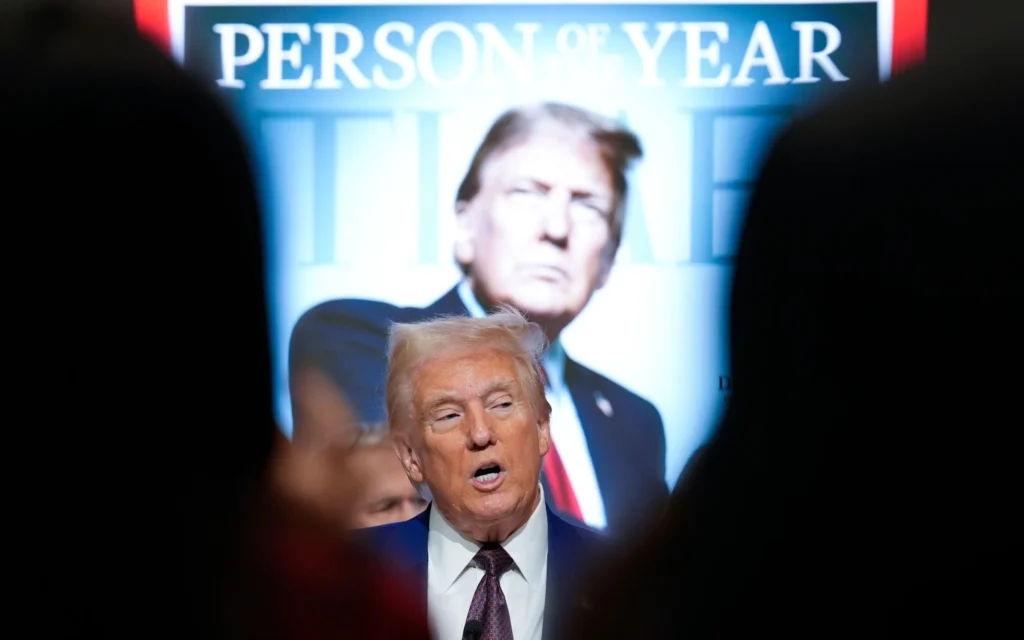
Incentives, Not Intentions
Trump’s economic philosophy has remained strikingly consistent:
- Growth beats redistribution
- Production beats dependency
- Incentives matter more than intentions
Where many politicians approach economics as a moral argument, Trump approaches it as a mechanical one. What makes businesses invest? What encourages workers to spend with confidence? What attracts capital rather than driving it offshore?
Those questions informed his approach to tax reform, deregulation, energy production, and trade. Lower corporate taxes were framed not as favors, but as magnets for investment. Deregulation was not ideological purity, but friction reduction. Energy independence was not cultural defiance, but cost control across every sector of the economy.
Markets understood this immediately. They don’t require perfection—only clarity.
Results That Refuse to Be Ignored
Despite dire predictions from pundits and policy elites, Trump-era policies coincided with rising equity markets, renewed business investment, wage growth, and strong consumer confidence. Even periods of volatility failed to reverse the broader trend: capital continued to flow into American assets.
Critics often argue these gains were coincidental or inherited. Markets disagree. Capital is mobile. It goes where it is treated best. And it kept choosing the United States.
Energy policy played a pivotal role. By expanding domestic production, the U.S. lowered input costs across the economy. Manufacturing, logistics, agriculture, and transportation all benefited. That’s not ideology—it’s arithmetic.
Trade, Tariffs, and Leverage
Perhaps no element of Trump’s economic agenda generated more controversy than tariffs. Detractors portrayed them as blunt instruments. Trump viewed them as leverage.
The American consumer market is the most valuable in the world. Access to it is power. Trump understood that trade negotiations are not philosophical debates; they are bargaining tables. Tariffs were not the end goal. They were the pressure point.
The result was renegotiation rather than retreat. Supply chains began to shift. Domestic production regained viability. Tariff revenues became a measurable part of the economic picture. Markets interpreted this not as isolationism, but as recalibration.
The 800-Pound Political Gorilla in the Room
There is an unspoken truth hovering behind nearly every critique of Donald J. Trump—one his political opposition refuses to confront honestly.
They do not despise him merely because of his tone or temperament. Those are convenient distractions. The deeper reason is far more destabilizing:
Trump is effective—and intellectually formidable—in arenas where the political class believed only they were qualified to operate.
For decades, Americans were told that economic leadership required polished language, elite consensus, and deference to international institutions. Trump shattered that mythology. He governed like a builder, not a bureaucrat. A dealmaker, not a committee chair. And most unforgivable of all—he succeeded.
This is why the “Trump is a moron” trope became essential. If Trump is intelligent, then his opponents’ failures become impossible to excuse. If he understands leverage, incentives, and power dynamics better than they do, then the authority of the so-called experts collapses under its own weight.
Markets, however, are brutally honest. They don’t care about credentials or cocktail-party approval. They respond to clarity, confidence, and competence. Time and again, they responded favorably to Trump’s policies—often contradicting elite predictions.
Trump’s genius does not lie in academic posturing, but in pattern recognition, decisive action, and understanding how systems behave under pressure. He knows what many career politicians never learn: systems reward results, not intentions.
Most threatening of all, Trump succeeded without permission.
If Trump were truly unintelligent, his opponents’ failures would be understandable.
If he is smart, their failures are unforgivable.
Yet even this explanation—education, experience, instinct, and independence—still doesn’t fully explain Donald J. Trump. America has had capable men in the Oval Office before. Some were brilliant. Some were seasoned businessmen. Some understood markets and power. Ability alone has never been enough to shape history.
What has always separated America’s most consequential leaders from the merely competent is something harder to quantify: a sense of purpose rooted beyond self-interest. And this is where the modern analysis of the Trump economy often stops short—missing the foundation that explains not just how Trump governs, but why he endures.

The Foundation Beneath the Trump Economy
All education and experience aside, something deeper animates Donald J. Trump. That foundation is faith.
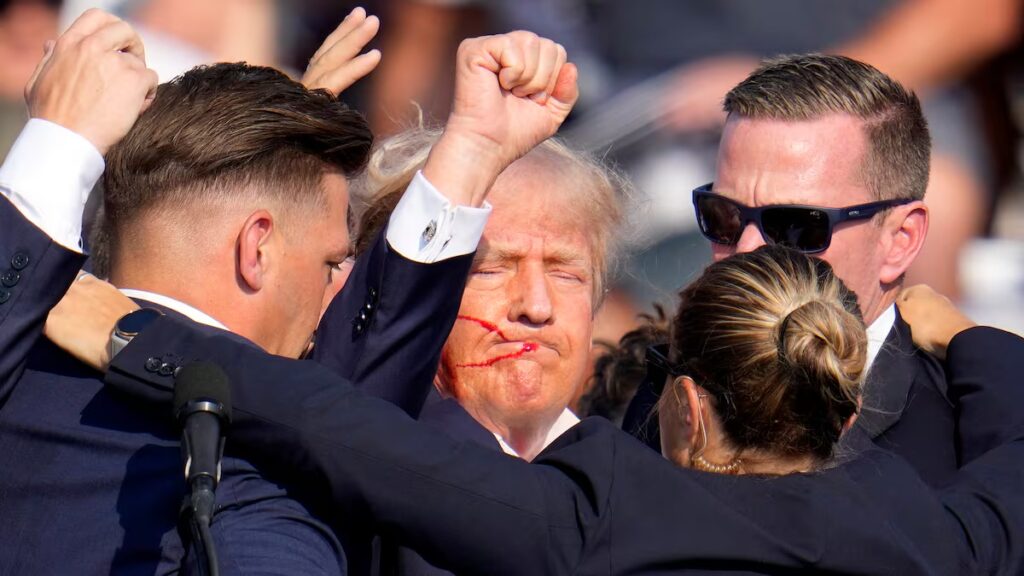
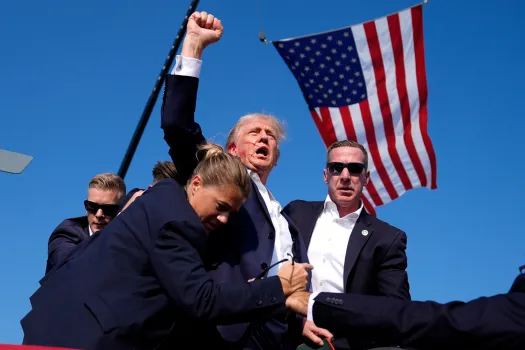
After the 2024 assassination attempt in Butler, Pennsylvania, Trump stated that he believed he was “spared for a divine reason.” Whether one agrees with his theology is secondary to the reality that he believes it. And belief shapes resolve in ways credentials never can.
In Trump’s mind, his presidency is not merely an opportunity—it is a calling.
That conviction explains behavior that otherwise makes little political sense. Trump could have retreated into wealth and comfort. He could have consolidated power or enriched himself, as history shows many leaders do. Instead, in a move entirely out of step with modern politics, he refused a presidential salary, donating his paychecks to charity.
That choice doesn’t fit the cartoon villain narrative. It fits a man who believes he is accountable to something higher than public approval.

Trump has never claimed to be a prophet. He is openly imperfect, often blunt, sometimes abrasive. But history—both American and biblical—is filled with flawed men who nonetheless carried immense responsibility because they believed their moment demanded courage rather than polish.
What detractors call bravado is better understood as conviction under pressure. Trump governs like a man who believes time matters and hesitation has consequences. His confidence, so often ridiculed, is the fuel that allows him to withstand relentless opposition without retreat.
This is the second reason his opponents truly hate him.
For decades, progressive policy has worked to secularize American public life, treating faith as something to be tolerated privately but excluded publicly. Trump represents a reversal—not a theocracy, but a return to moral clarity in leadership. He does not hide his belief that America has a purpose, that right and wrong exist, and that national strength is something to be stewarded, not apologized for.
To a political movement built on moral relativism, that worldview is threatening.
Trump’s faith does not make him flawless. It makes him anchored. It provides a True North Star when consensus collapses and frames his economic vision around stewardship rather than exploitation.
Looking Ahead: 2026 and Beyond
From this blend of conviction and competence, Wall Street looks ahead. Conservative economists and market analysts anticipate several trends if a Trump-style framework continues to influence policy:
Reindustrialization accelerates.
Domestic manufacturing, infrastructure, and logistics continue attracting long-term capital as resilience replaces fragility.
Capital formation outpaces consumption.
Tax certainty, regulatory clarity, and investment incentives remain bullish signals.
Energy remains a strategic advantage.
Abundant, affordable energy continues to lower costs economy-wide and strengthen national security.
Dollar strength through growth.
Markets favor growth-driven stability over debt-driven expansion.
Wall Street is not sentimental. Its optimism is conditional. But its behavior suggests a belief that a pro-growth, pro-production framework outperforms alternatives rooted in regulation and managed decline.
The Engine and the Mechanic
America remains the world’s greatest engine for success and freedom. But even the finest engine requires a mechanic who understands how it actually runs.
Trump’s education provided the blueprint. His business career revealed the stress points. His faith supplies the conviction. Together, they form an economic worldview markets recognize and reward.
You don’t have to admire the man to read the scoreboard.
History shows that when America chooses growth over apology and production over paralysis, prosperity follows. The markets have noticed. And as 2026 approaches, they appear to be betting that this story is far from finished.
The real question isn’t whether Donald J. Trump fits his critics’ caricature.
It’s whether his insight, experience, and belief in American purpose align with reality.
Judging by the markets, they do.
About the Author