
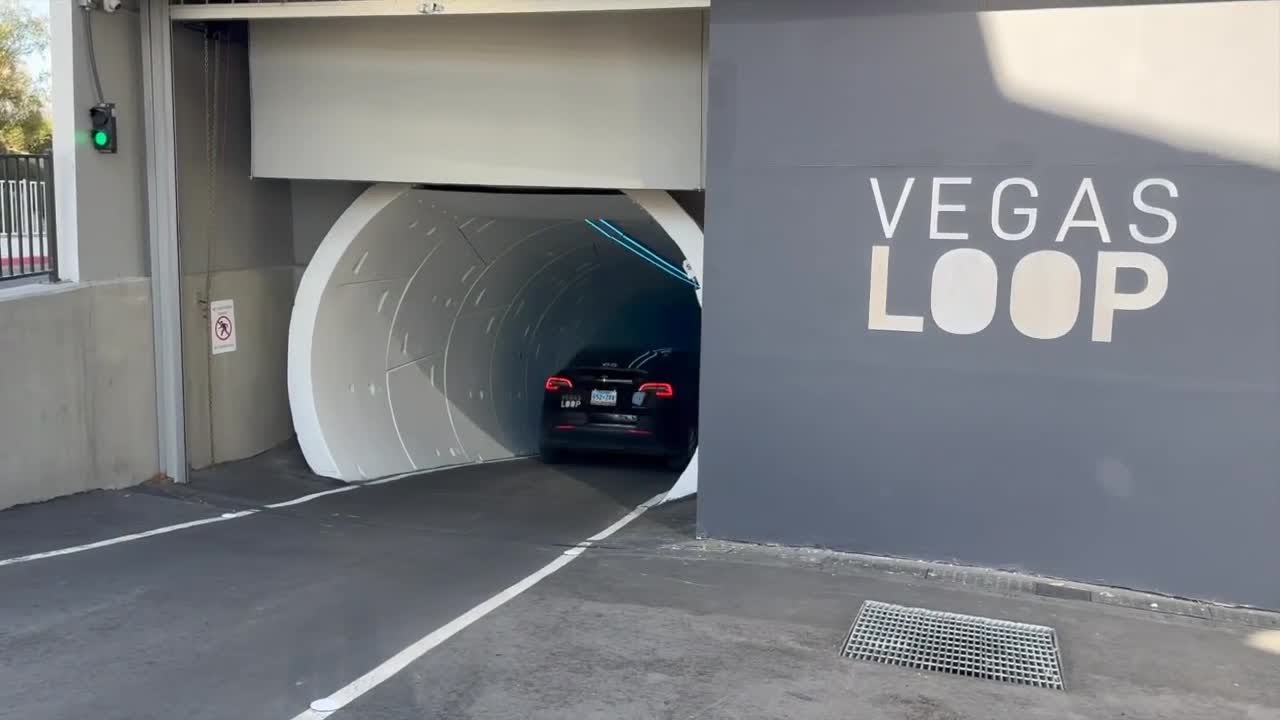
A recent report from the Nevada Current highlights growing concern inside Carson City over whether the Las Vegas Convention and Visitors Authority (LVCVA) should remain fully committed to the Vegas Loop project operated by The Boring Company.
At issue is whether the LVCVA has put too many eggs in one basket by going “all-in” on the underground transportation system designed to move visitors quickly beneath the Las Vegas Strip and Convention Center campus. One state lawmaker is now publicly questioning whether that level of commitment is prudent—or premature.
The Vegas Loop, a tunnel-based transit system championed by Elon Musk, was sold to Nevadans as an innovative, cost-effective solution to traffic congestion and convention transportation. Supporters argue that it represents exactly the kind of private-sector innovation Las Vegas was built on: fast, flexible, and forward-thinking.
And to be fair, the system has delivered some results. The Convention Center Loop has operated during major events, moved thousands of attendees, and avoided the cost overruns typically associated with large government transit projects. Compared to traditional rail systems, the Loop was built quickly and at a fraction of the cost.
So why the concern?
The lawmaker’s questions center on governance, transparency, and long-term risk. As the Loop expands beyond the Convention Center footprint, critics want to know what safeguards are in place if projections fall short or technology changes. They also question whether LVCVA—funded by room taxes paid by visitors—should be so closely tied to a single private company’s vision.
From a Conservative and Independent perspective, these are fair questions. Public-private partnerships can be powerful, but they work best when oversight is clear and accountability is firm. Blind faith—whether in government bureaucracies or tech entrepreneurs—has never been good policy.
At the same time, there is a danger in overcorrecting. Nevada’s success, especially Las Vegas’, has always depended on a willingness to take calculated risks. If leaders become paralyzed by “what ifs,” innovation stalls, costs rise, and opportunity moves elsewhere. Other cities are watching closely, and none are waiting for Nevada to make up its mind.
This debate ultimately comes down to balance. Innovation should be encouraged, but not without guardrails. Taxpayer-backed agencies should demand transparency, performance benchmarks, and exit options—while still allowing room for creative solutions that government alone could never deliver.
Asking tough questions does not mean opposing progress. It means ensuring that progress is sustainable, responsible, and in the best interest of Nevadans—not just today, but ten and twenty years down the road.
Vegas didn’t become a global destination by playing it safe. But it also didn’t get there by writing blank checks.
Smart growth requires both vision and vigilance.
#TheNevadaConservative #TNC #Local
About the Author