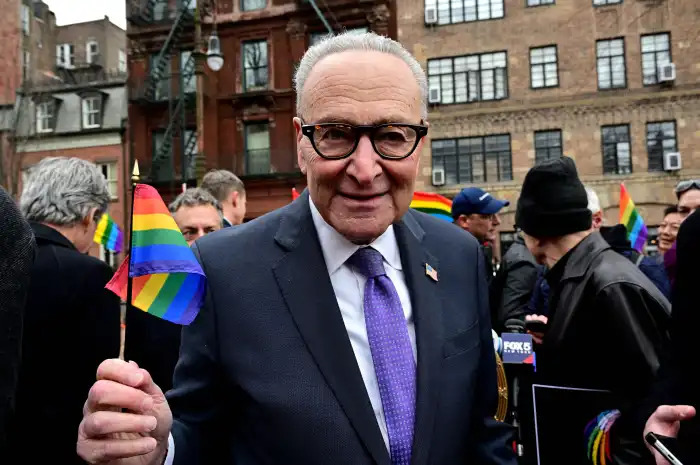
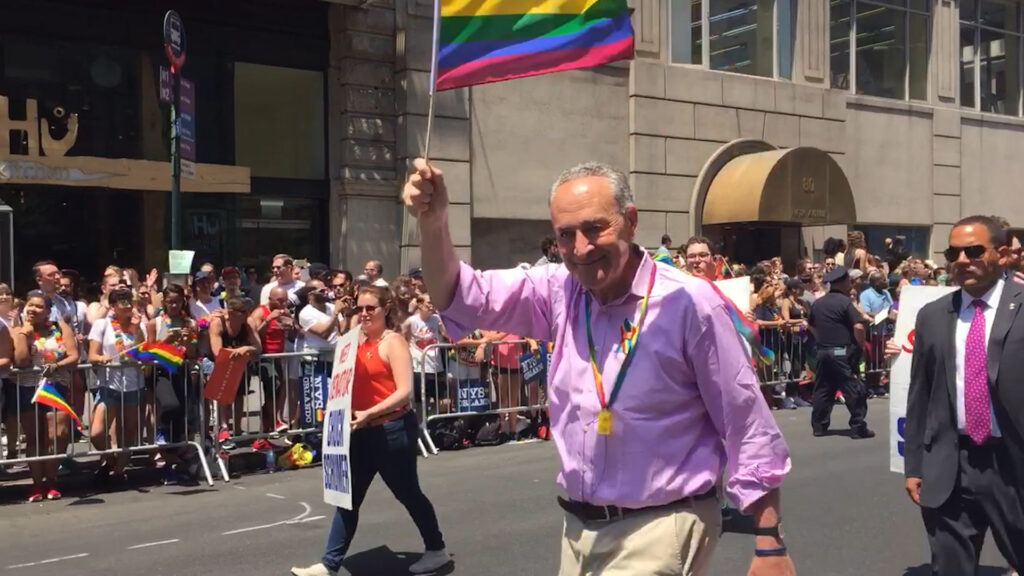
Senate Minority Leader Chuck Schumer (D-NY) has introduced legislation to designate the rainbow Pride flag as a “congressionally authorized flag,” granting it the same federal protections and recognition currently reserved for the United States flag, military banners, POW/MIA flags, and similar symbols.
The move comes directly in response to the Trump administration’s recent decision to remove a Pride flag from the Stonewall National Monument in New York City. The National Park Service acted under a longstanding directive limiting flags on federal properties to the U.S. flag, Interior Department flag, or specific exceptions like POW/MIA—classifying the Pride flag as non-agency and political in nature. The removal sparked protests, lawsuits from advocacy groups claiming it violated federal law, and local officials briefly re-raising the flag in defiance.
Schumer, speaking at the site, called Stonewall “sacred ground” and framed the bill as a necessary defense against what he described as a “hateful crusade” by the administration. The legislation would authorize the Pride flag’s display at national parks and monuments, including Stonewall (birthplace of the modern LGBTQ movement), and prevent future removals by codifying its status in law. Schumer emphasized that it would protect “liberty and justice for all” and allow national parks to decide on flag displays.
Critics, however, see the proposal as a clear example of political opportunism—especially in a Republican-controlled Congress where passage appears unlikely. Observers note that equating a movement-specific symbol with the Stars and Stripes, which represents the nation’s unity, sovereignty, and sacrifices across generations, risks diluting the unique reverence Americans hold for Old Glory. The U.S. flag stands as a constitutional emblem of one nation under God, forged through shared history and values—not tied to any particular social or ideological cause.
For many who hold traditional, family-centered beliefs rooted in faith and the founders’ vision, this push raises deeper questions about priorities in Washington. When leaders rush to federalize symbols aligned with cultural shifts while sidelining core national unity, it can feel like another step away from the principles that have made America the best hope for freedom and moral clarity in the world—imperfect, yes, but unmatched.
The bill underscores ongoing tensions over symbolism, federal authority, and cultural direction. In a time when Americans look to leaders to uphold timeless truths rather than chase headlines, proposals like this remind us why vigilance matters: protecting what unites us most—the Constitution, the rule of law, and the flag that flies for all.
#TheNevadaConservative #TNC #National #OldGloryFirst #PoliticalPosturing
About the Author