
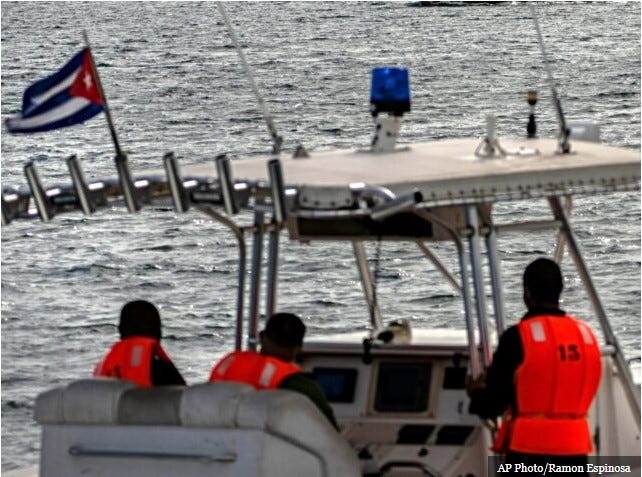
In a dramatic escalation off Cuba’s northern coast, Cuban authorities reported killing four individuals and wounding six others in a shootout with a Florida-registered speedboat that entered Cuban territorial waters on Wednesday, February 25, 2026. The Cuban Interior Ministry described the incident as a successful defense against an “armed infiltration with terrorist aims,” alleging the 10 passengers — all Cuban nationals residing in the United States — were heavily armed and intent on unleashing violence on the island.
According to Havana’s account, the speedboat was intercepted about one mile northeast of Cayo Falcones in Villa Clara province. Border guard troops approached for identification, at which point the vessel’s occupants opened fire first, injuring one Cuban officer. Cuban forces returned fire, seizing assault rifles, handguns, Molotov cocktails, ballistic protection vests, telescopic sights, and military-style camouflage clothing from the boat. The ministry identified several of the passengers, including one of the deceased, Michel Ortega Casanova, and claimed most had “known histories of criminal and violent activity.” Two were specifically wanted for terrorism-related offenses, and a detained suspect allegedly confessed to being “sent from the United States” to facilitate the operation.
This narrative fits neatly into the Cuban regime’s long-standing portrayal of any anti-government activity as foreign-sponsored terrorism. Yet the facts remain murky, and U.S. officials are treating the claims with caution. Secretary of State Marco Rubio called the incident “highly unusual” — the first of its kind in recent memory — and stressed that the U.S. is conducting an independent investigation through the Department of Homeland Security and Coast Guard. “We have various different elements of the U.S. government that are trying to identify elements of the story that may not be provided to us now,” Rubio said, emphasizing it was not a U.S. government operation. Florida Attorney General James Uthmeier went further, vowing to hold “these communists accountable” and refusing to trust Havana’s version of events.
The brother of one victim, Misael Ortega Casanova, offered a poignant counter-perspective. Describing his late brother — a U.S. citizen, truck driver, and family man — as driven by an “obsessive and diabolical” quest for Cuba’s freedom after years of suffering under the regime, he lamented the loss while acknowledging the risks. “They became so obsessed that they didn’t think about the consequences nor their own lives,” he told reporters.
This confrontation arrives at a fraught moment in U.S.-Cuba relations. With Venezuelan strongman Nicolás Maduro ousted, Cuba has lost a key economic lifeline in subsidized oil, exacerbating shortages amid new U.S. tariffs on nations supplying energy to the island. The Trump administration’s aggressive posture toward leftist regimes in the hemisphere has heightened Havana’s paranoia about external threats. While some in the Cuban exile community in Florida have long advocated for decisive action against the dictatorship, unauthorized armed incursions risk playing directly into the regime’s propaganda while endangering lives.
For Nevada conservatives, the incident underscores broader lessons about authoritarian regimes and the perils of unchecked migration flows — including the human smuggling networks that often overlap with more sinister operations. Thousands of Cubans have fled to the U.S. in recent years seeking freedom and opportunity, many passing through or settling in places like Las Vegas. Yet when desperation turns to armed adventurism, it rarely advances the cause of liberty and often bolsters the oppressors’ grip.
The U.S. must verify the facts independently, protect American citizens or residents involved, and avoid any escalation that could further entrench the Castro-era regime. At the same time, the Cuban people deserve better than a government that shoots first and labels dissent terrorism. True change in Cuba will come through sustained pressure, economic isolation of the dictatorship, and support for peaceful democratic movements — not reckless boat rides into heavily patrolled waters.
As investigations continue, one thing is clear: this deadly clash highlights the enduring volatility just 90 miles from Florida — and the high stakes in America’s backyard.
About the Author