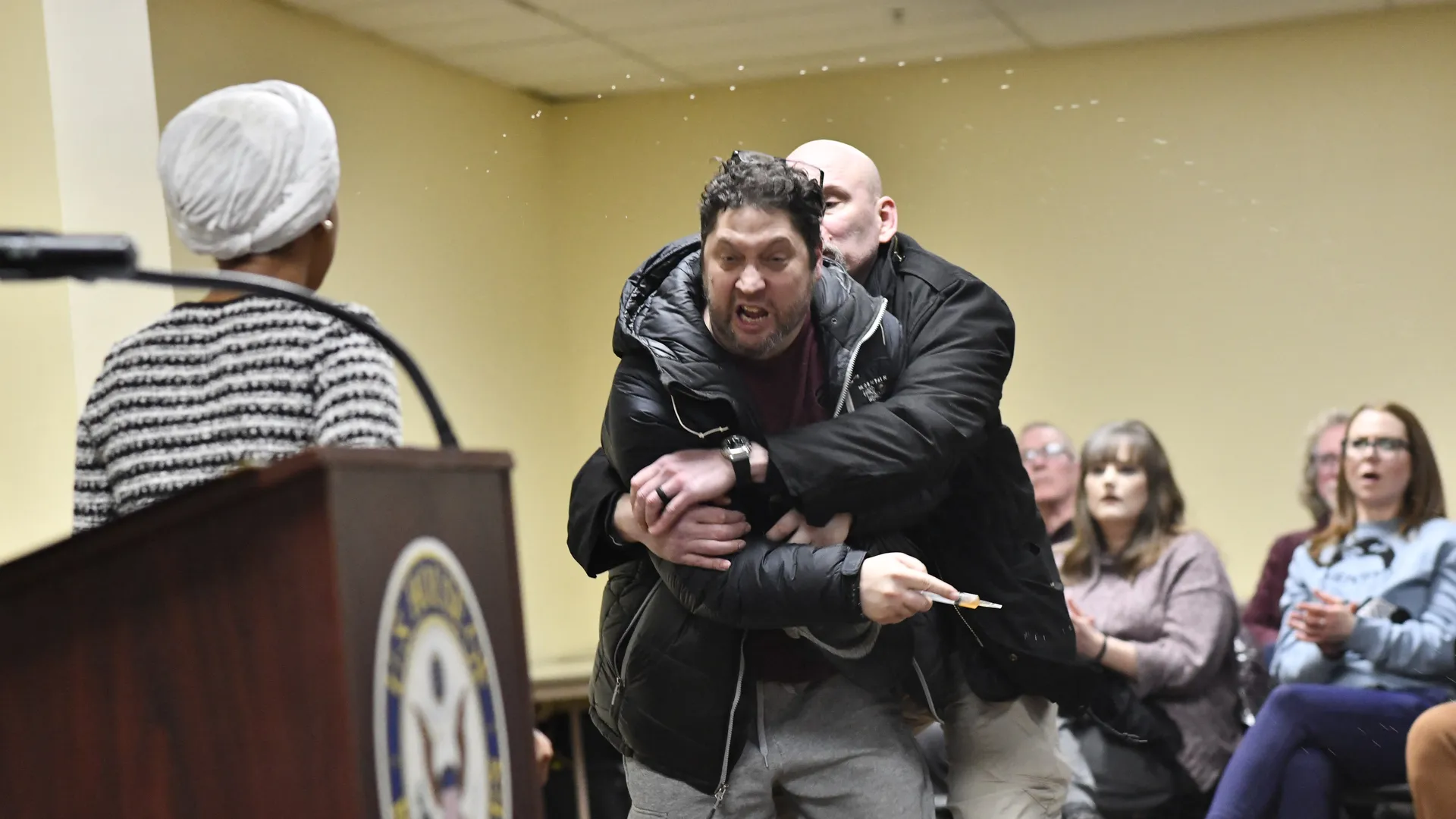
Federal authorities are continuing their investigation into an alleged attack involving Ilhan Omar, after newly revealed text messages suggest the suspect may have anticipated his own arrest prior to attending a public event.
According to reporting by the New York Post, the individual accused of attacking Rep. Omar allegedly sent cryptic text messages to a neighbor in advance of the incident, including a message stating, “I might get arrested.” Investigators say the communication is now being reviewed as part of the broader inquiry into intent, premeditation, and motive.
What Is Known So Far
The incident reportedly occurred during or in connection with a public town hall event, a setting traditionally designed to allow constituents direct access to their elected officials. Law enforcement officials have not released full details regarding the suspect’s background or mental state, emphasizing that the investigation remains active.
Authorities have confirmed:
- The suspect is in custody
- Federal charges are being considered or have been filed
- No broader conspiracy has been announced at this time
Officials have also stressed that all individuals are presumed innocent until proven guilty in a court of law.
Text Messages Raise Questions of Intent
The alleged text message—sent prior to the event—has drawn attention because it may indicate forethought rather than a spontaneous act. Investigators are examining whether the suspect believed his actions would lead to arrest and whether that belief factored into his decision to attend the event.
Law enforcement experts often note that pre-incident communications can be relevant in determining intent, though such evidence must be weighed carefully alongside verified actions and testimony.
Public Officials and Public Safety
Attacks or threats against elected officials—regardless of political affiliation—are treated seriously under federal law. Members of Congress routinely attend public events with security assessments in place, but town halls remain one of the most open and accessible forums in American civic life.
Incidents like this inevitably raise difficult questions:
- How can public officials remain accessible while staying safe?
- What role should law enforcement play at public forums?
- Where is the line between protest, dissent, and criminal behavior?
These questions are not partisan. They go to the heart of representative government and the ability of citizens and officials to engage one another peacefully.
The Importance of Due Process
While the details surrounding this case are troubling, it is essential to distinguish between verified facts and speculation. Law enforcement agencies have cautioned against drawing conclusions before the investigation is complete and charges are fully adjudicated.
Recent history has shown the danger of rushing to judgment—whether for political advantage or media attention—before all evidence is examined. A system governed by the rule of law requires patience, transparency, and restraint.
A Broader National Context
This incident comes at a time when political tensions remain elevated nationwide. Town halls, protests, and public demonstrations have increasingly become flashpoints, underscoring the need for clear boundaries between lawful expression and unlawful conduct.
The First Amendment protects speech, dissent, and peaceful protest. It does not protect threats, violence, or actions that place others in harm’s way. Maintaining that distinction is essential to preserving both liberty and order.
What Comes Next
Federal prosecutors are expected to determine the full scope of charges once the investigation is complete. Additional information, including court filings and verified timelines, is likely to emerge in the coming days.
Until then, officials urge the public to allow the justice system to function as intended—guided by evidence, not emotion.
For now, the case serves as another reminder that political disagreement in a constitutional republic must be resolved through ballots, debate, and lawful process—not intimidation or violence.
About the Author