
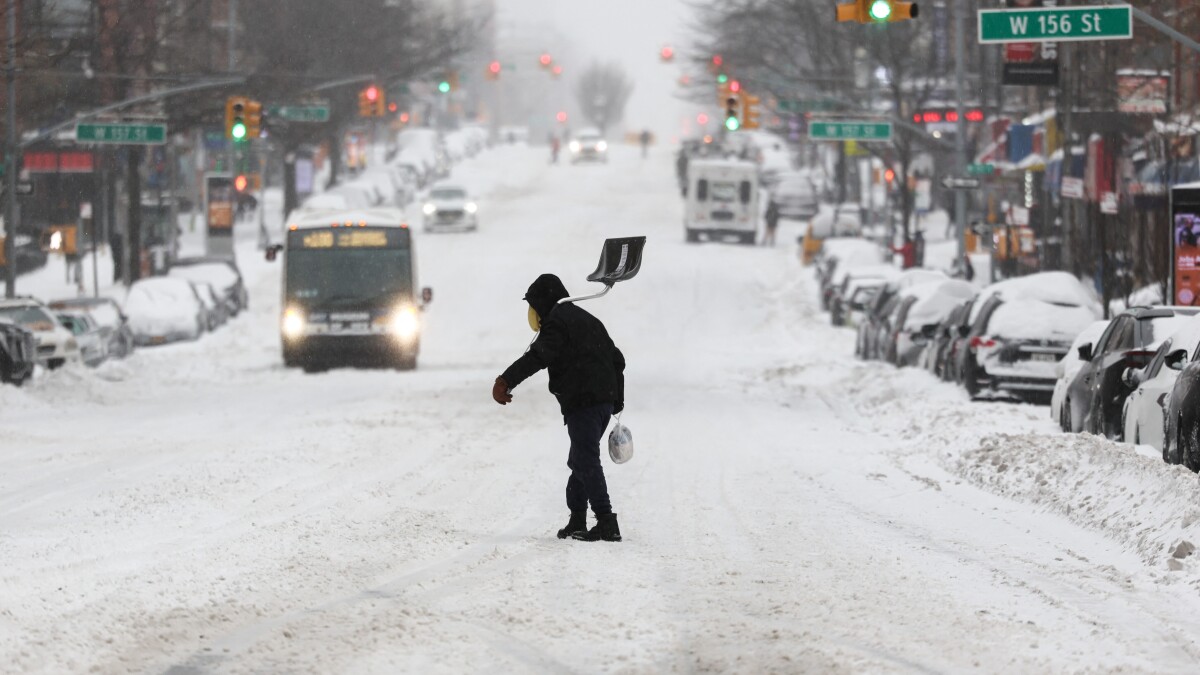
A powerful winter storm swept across large portions of the United States this weekend, bringing widespread disruption to travel, commerce, and daily life. Heavy snow, ice, and strong winds stretched from the Plains through the Midwest and into parts of the East, creating hazardous conditions that led to the cancellation of more than 11,400 flights on Sunday, according to reporting by the Associated Press.
Airports in major hub cities were among the hardest hit. Snow-covered runways, limited visibility, and dangerous icing conditions forced airlines to ground planes for safety reasons. As is often the case with large-scale weather events, cancellations in one region quickly rippled across the national air system, stranding travelers far from the storm itself and complicating efforts to rebook flights. Airline crews faced their own challenges, with staffing schedules disrupted as planes and personnel were left out of position.
On the ground, conditions were equally severe. Parts of the central United States experienced blizzard warnings, with near-zero visibility making travel treacherous or impossible. In other areas, ice accumulation created hazardous roads and downed power lines. State and local officials urged residents to stay home unless travel was absolutely necessary, and many highways were temporarily closed due to accidents and stalled vehicles.
Power outages affected tens of thousands of homes as ice and wind stressed electrical infrastructure. Utility crews worked around the clock to restore service, often in difficult and dangerous conditions. Emergency shelters were opened in several states to provide warmth and safety, particularly for elderly residents and those without reliable heating.
Meteorologists described the storm as unusually expansive, combining several weather threats into one system. Snow totals varied widely depending on location, while some regions saw significant ice buildup that can be especially damaging. High winds added to the danger, producing whiteout conditions in rural areas and increasing the risk of drifting snow on open roads.
Beyond travel and power concerns, the storm disrupted supply chains and routine deliveries. Trucking routes slowed or shut down entirely in some corridors, delaying shipments of goods ranging from consumer products to medical supplies. Businesses adjusted hours or closed temporarily, while schools and public offices announced closures to keep students and employees safe.
Despite the challenges, communities across the affected regions demonstrated resilience and cooperation. Reports from local authorities and residents described neighbors helping one another clear driveways, check on those living alone, and share resources. First responders, utility workers, and transportation crews played a critical role in maintaining safety and restoring normalcy as conditions allowed.
Large winter storms like this one serve as reminders of the scale and power of nature and the importance of preparedness. Weather systems do not stop at state lines, and their effects are felt nationwide through travel, logistics, and economic activity. Accurate forecasting, timely communication, and coordinated response efforts remain essential to minimizing risk and protecting lives.
As cleanup continues and travel schedules gradually recover, this storm will be remembered not only for its size and impact, but also for the collective effort required to endure it. For many Americans, it was a weekend marked by patience, caution, and a renewed respect for winter’s ability to reshape daily life in a matter of hours.
#TheNevadaConservative #TNC #Weather
About the Author