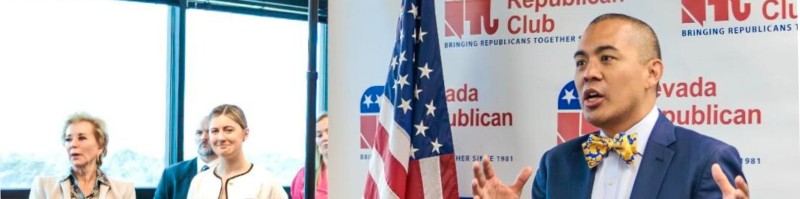
A political stir is brewing in Nevada after ethics complaints were filed against Rudy Pamintuan, a state staffer tied to the office of Stavros Anthony. The issue centers on the visit of a federal official and whether state resources were improperly used in connection with that visit.
The question many conservatives are asking is straightforward: Is this a legitimate ethics concern — or an attempt to cast a shadow over the Lieutenant Governor?
Let’s walk through it carefully.
What’s Being Alleged?
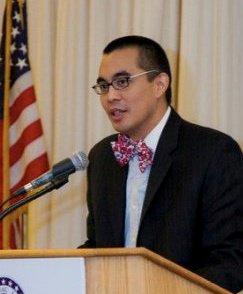
According to reporting by the Las Vegas Review-Journal, complaints were filed alleging that Pamintuan, a staff member in the Lieutenant Governor’s office may have engaged in improper coordination or use of state resources during a federal official’s visit.
Ethics complaints in Nevada typically revolve around whether public employees:
- Used taxpayer-funded time or resources for political activity
- Provided preferential access
- Blurred lines between official duties and partisan events
At this stage, it is important to note:
An ethics complaint is not a finding of wrongdoing. It is an allegation that triggers review.
And in politics, timing often tells its own story.
The Broader Political Context
Lt. Gov. Anthony has built a reputation as a law-and-order conservative and a vocal presence in Nevada’s political landscape. In an environment where partisan battles run hot, even routine coordination can quickly become fodder for controversy.
It would not be the first time an ethics complaint was used as a political tool.
In today’s climate, filing a complaint can generate headlines long before any investigation reaches a conclusion. The accusation becomes the narrative. The resolution — if it comes — rarely receives equal coverage.
That’s not unique to Nevada. That’s modern politics.
The Fine Line Between Official and Political Activity
Public offices operate in a space where policy, politics, and public engagement intersect daily.
If a federal official visits Nevada to discuss policy issues, economic development, or federal-state coordination, involvement from state offices is natural. The question becomes whether:
- The visit was official government business
- Or whether it crossed into campaign-related activity
The distinction matters.
If state resources were used for partisan purposes, that is a serious issue.
If they were used for legitimate governmental coordination, then complaints may reflect political gamesmanship rather than misconduct.
That determination belongs to investigators — not social media commentators.
Is This “Throwing Shade”?
The phrase many are using is “throwing shade” — attempting to tarnish reputations through implication rather than proof.
There are patterns voters should recognize:
- Complaint Filed
- Headline Written
- Speculation Amplified
- Political Damage Done — Regardless of Outcome
If the investigation clears the staffer, will that headline travel as far as the original accusation?
History suggests otherwise.
Due Process Still Matters
Conservatives have long argued for consistency in accountability. Ethics laws should apply equally — regardless of party affiliation.
If rules were broken, consequences should follow.
If they were not, reputations should be restored just as publicly as they were questioned.
Fairness must go both ways.
Nevada’s Political Temperature
Nevada has become one of the most closely watched battleground states in the country. With tight elections and shifting voter blocs, even administrative missteps can become major political flashpoints.
The office of the Lieutenant Governor plays a visible role in economic development and state representation. That visibility makes it a natural target for scrutiny — and, at times, political crossfire.
But scrutiny is not the same as guilt.
What Happens Next?
Ethics complaints in Nevada are typically reviewed by appropriate oversight bodies to determine whether a formal investigation is warranted. That process can take time.
Until findings are released:
- Allegations remain allegations
- Facts remain under review
- Conclusions remain premature
It’s worth remembering that public service is not for the faint of heart. In today’s political arena, even routine decisions can become controversy.
A Thought for President’s Day Week
As we mark President’s Day and reflect on leadership in America, we would do well to remember something simple:
Strong leadership requires accountability — but it also requires fairness.
If this is a legitimate ethics concern, let it be investigated fully.
If it is political maneuvering, voters will see through it.
Nevadans deserve clarity, not insinuation.
We’ll continue monitoring developments and report updates as facts — not speculation — emerge.
#TheNevadaConservative #TNC #Local
About the Author