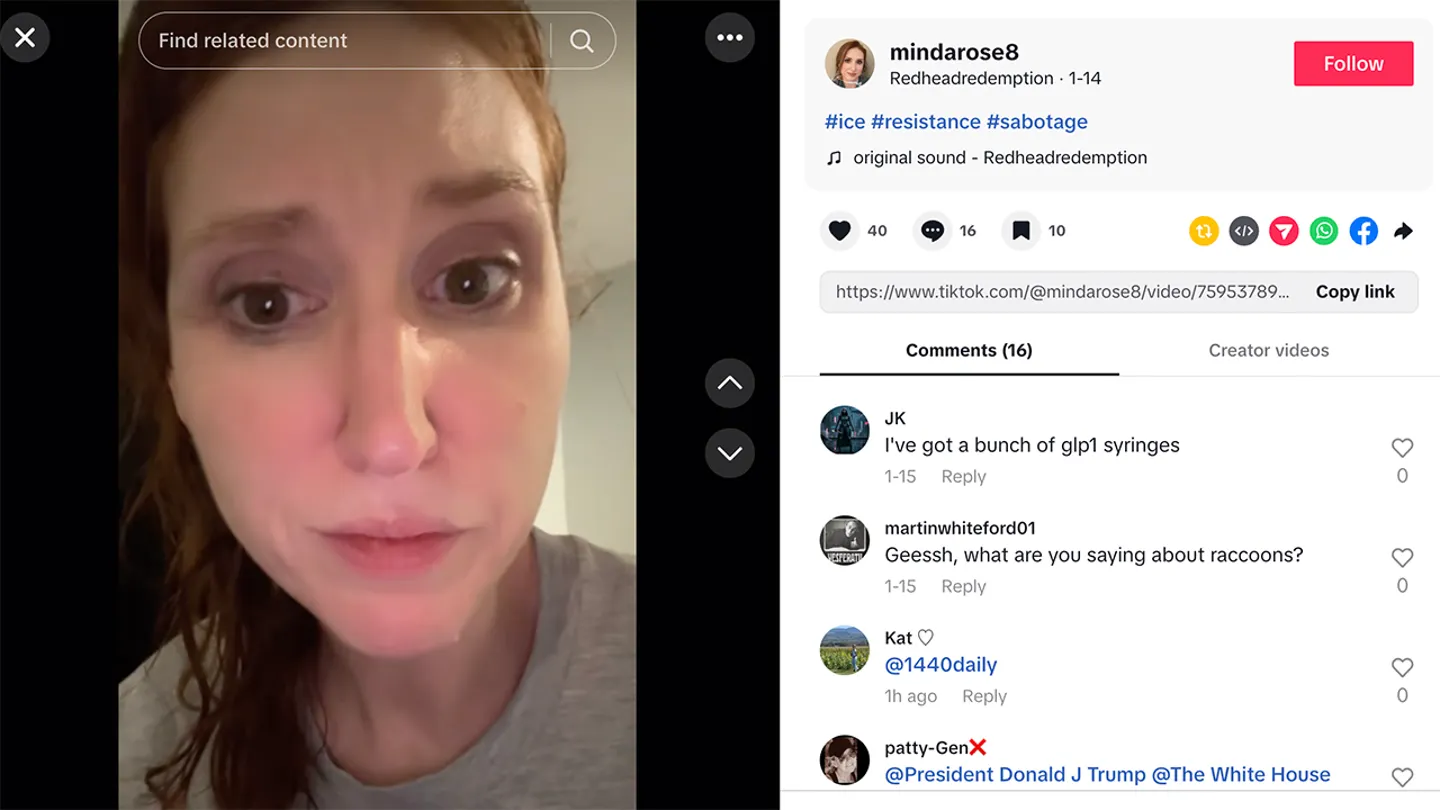
In a story that’s making waves across the nation—not just in medical circles—a nurse at **Virginia Commonwealth University Health was recently terminated after a series of viral TikTok videos surfaced in which she suggested harmful “resistance” tactics against federal **U.S. Immigration and Customs Enforcement (ICE) agents. The controversy has sparked heated discussion about professional conduct, social media use, and the responsibilities of healthcare workers.
Videos Spark Outrage
The videos—shared widely on social media after being reposted by popular accounts—showed the now-former nurse offering what she described as “sabotage tactics” against ICE agents. Among her suggestions were carrying syringes filled with saline or a paralytic drug, spraying concoctions made from poison ivy and poison oak, and even advising women to date ICE agents and tamper with their food using laxatives. Those remarks quickly drew bipartisan condemnation as inappropriate and dangerous, especially coming from someone in a caregiving profession.
VCU Takes Swift Action
In response to the backlash, VCU Health promptly investigated the videos and confirmed that the individual responsible was no longer employed by the health system. The university also stated in a brief release that the content of the videos “does not reflect the integrity or values of our health system.” VCU Police reportedly assisted with the matter as part of the investigation.
Medical Watchdog Weighs In
The firing drew strong reaction from Do No Harm, a national medical watchdog group that says the incident goes beyond a single employee’s misconduct. The group’s executive director criticized VCU for what she calls a broader problem of “radical politics” influencing medical education and clinical practice. In statements to media outlets, the watchdog argued that firing the nurse was the “bare minimum” and challenged VCU to address what they see as ideological issues within the institution’s culture.
Why This Matters Nationally
This story resonates far beyond Richmond. It hits at the crossroads of free speech, professional ethics, and public safety. When healthcare professionals take to social media to promote ideas that verge on harmful or unlawful—even if meant as “tactics” or “advice”—employers and the public are left grappling with where to draw the line between personal expression and professional responsibility.
Critics of the nurse’s statements argue that healthcare workers should uphold the highest ethical standards, especially when it comes to discussions involving law enforcement—whether local or federal. Supporters of the watchdog’s criticism of VCU also see the debate as part of a larger discussion about ideological influence in institutions that train and employ caregivers.
Accountability and Public Trust
At a time when trust in institutions—medical, educational, and governmental—is under intense scrutiny nationwide, stories like this one underscore how fragile that trust can be. Hospitals and universities must balance protecting free expression with ensuring that employees who represent their institutions uphold values that prioritize safety, professionalism, and respect for the rule of law.
For many Americans watching this unfold, the takeaway is clear: actions on social media can have real-world consequences, especially when public safety and public trust are in play.
#TheNevadaConservative #TNC #National
About the Author