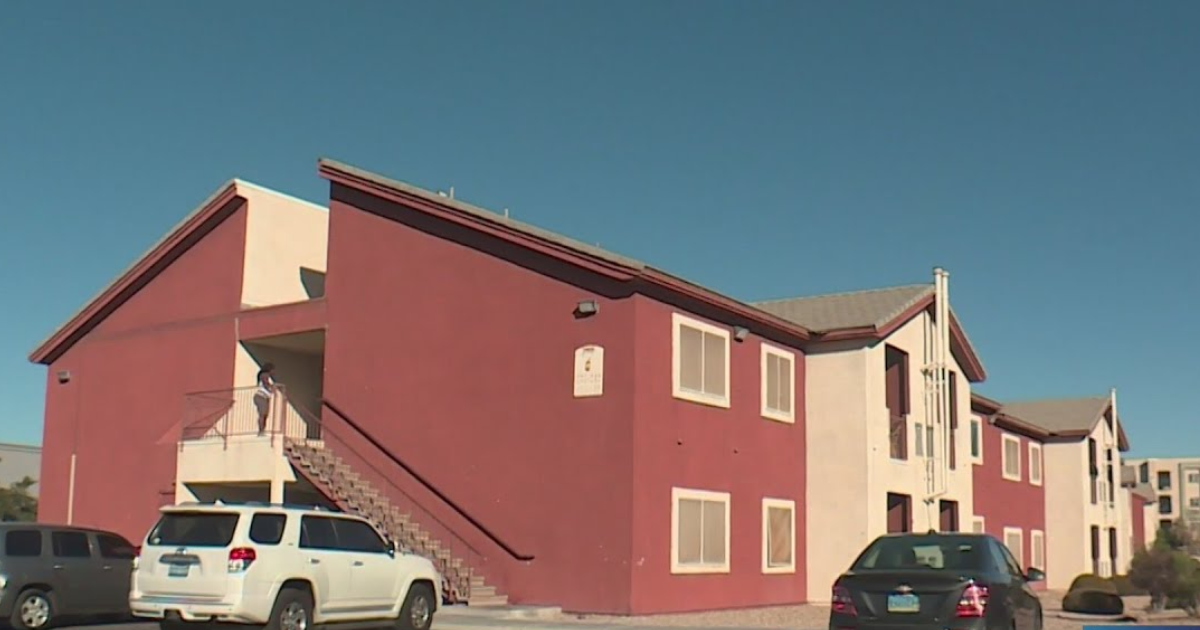
In the heart of Las Vegas’s Arts District, vulnerable seniors, disabled residents, and formerly homeless individuals at the Hebron apartment complex (now rebranded as On the Boulevard Suites) faced a sudden crisis when the property owner ended a partnership with a nonprofit manager, leading to eviction notices and sharp rent increases for dozens of tenants.
The 124-unit property had been operated by Caridad Inc., a nonprofit that kept rents affordable—often between $400 and $1,000—for those on fixed incomes like Social Security, disability benefits, and food stamps. In mid-February 2026, owner YSBM Investments LLC terminated that arrangement, citing unpaid back rent, and brought in new management under Advanced Management Group. By mid-March, around 40 tenants received seven-day eviction notices, with some rents set to double or rise by hundreds of dollars come June—pushing monthly payments from $575 to $1,150 for one 70-year-old veteran amputee, and similar hikes for others barely scraping by on $1,000 or less in benefits.

Tenants described the shock: one long-time resident who never missed a payment, even during a six-month hospital stay, said he “can’t afford anything” now. Another questioned how to come up with $1,250 for rent on disability income. The notices sparked fear of homelessness in a city where affordable housing is already scarce for those who play by the rules and rely on earned benefits rather than endless handouts.
Enter city and county officials, led by Las Vegas Mayor Shelley Berkley, who rushed in with emergency rental assistance, social worker visits, relocation help, and coverage for some March rents. Berkley vowed the city and Clark County would “do everything we can” to prevent people from ending up on the streets, aiming to help “as many as possible, hopefully everybody.” Some tenants received temporary aid—covering one or two months in certain cases—while new management offered opportunities for those meeting standard requirements to stay, emphasizing a “responsible transition with dignity.”

This swift government intervention prevented immediate evictions and bought time for affected residents. Yet it raises important questions for conservatives who cherish private property rights and free-market principles. The owner acted within lease terms and Nevada law, which offers limited recourse for tenants when notices are proper. While compassion for struggling seniors and the disabled is admirable, using taxpayer resources for emergency bailouts risks setting a precedent that undermines landlords’ rights to manage their investments and could discourage private development of affordable options.
True solutions lie in reducing regulatory burdens, encouraging more housing supply through market incentives, and empowering families with economic opportunity—not perpetual government dependence. America remains the land of second chances, but we must protect the constitutional freedoms that make prosperity possible for all.
#TheNevadaConservative #Local #Housing #PropertyRights
About the Author