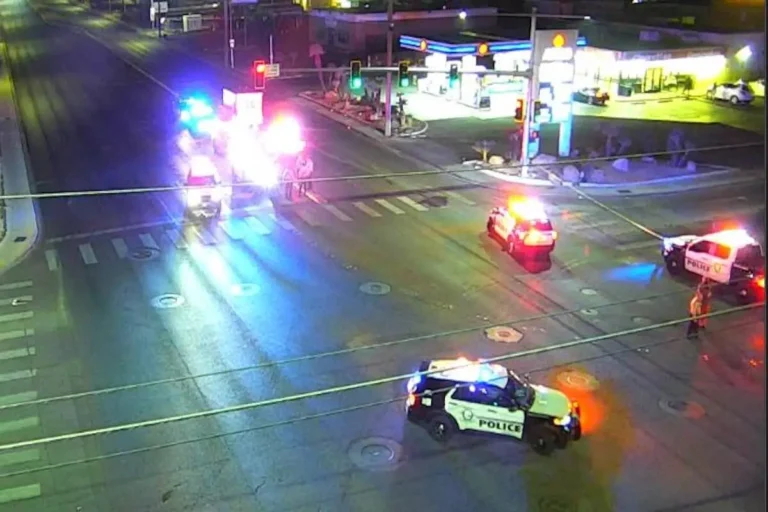

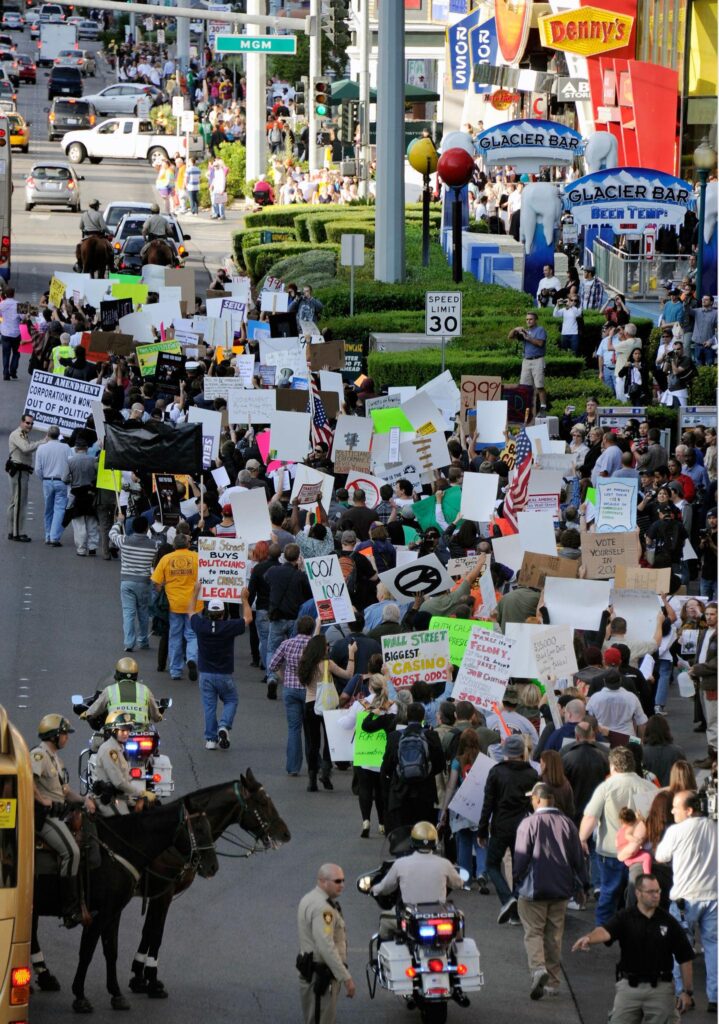
A series of anti-ICE protests unfolded across the Las Vegas Valley on Friday, drawing demonstrators to multiple locations as part of a broader national movement opposing federal immigration enforcement. The gatherings included marches, rallies, and walkouts, with organizers urging participants to remain peaceful while voicing opposition to current immigration policies.
Protests were reported in Las Vegas, Henderson, and surrounding areas, with participants holding signs, chanting slogans, and calling for an end to Immigration and Customs Enforcement operations. Some events were framed as part of a nationwide “economic blackout” or general strike, encouraging supporters to refrain from work or commerce for the day.
Law Enforcement Presence and Response
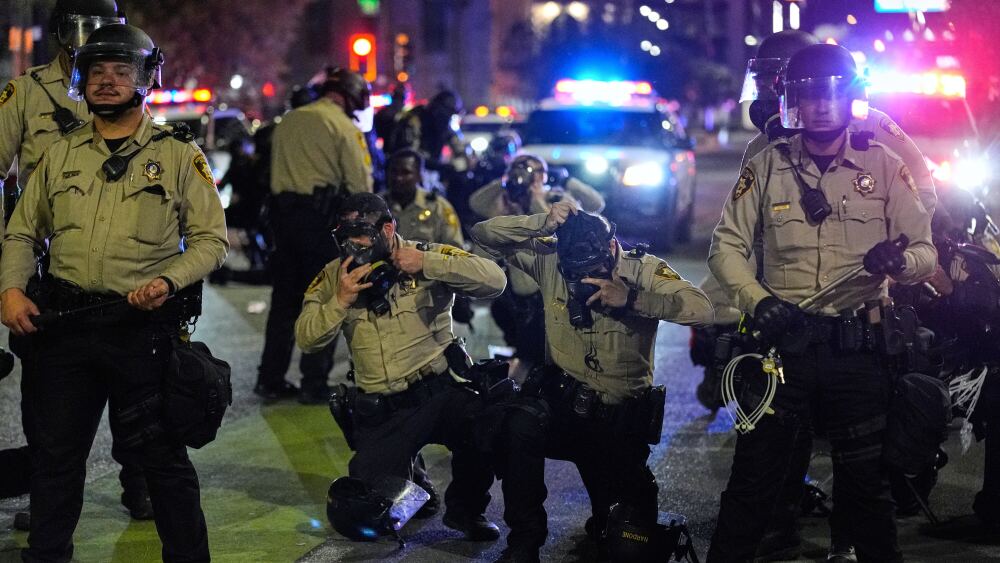
Local law enforcement agencies, including Las Vegas Metropolitan Police Department, maintained a visible but measured presence throughout the demonstrations. Officers monitored crowds, managed traffic, and worked to ensure public safety while allowing protesters to exercise their First Amendment rights.
Authorities emphasized that their primary goal was to prevent violence, vandalism, or disruptions that could endanger participants or the general public. No widespread arrests were reported, and law enforcement appeared to favor crowd management and de-escalation strategies rather than aggressive enforcement.
Police officials reiterated that peaceful protest is protected under the Constitution, but warned that actions interfering with traffic, businesses, or public safety could result in enforcement measures if situations escalated.
Political Conversations and Community Reactions
The protests have reignited political debate in Nevada over immigration enforcement, federal authority, and the role of local governments and police agencies. Supporters of the demonstrations argue that ICE enforcement harms immigrant communities and undermines trust between residents and law enforcement.
Critics, however, point to the importance of upholding federal law and maintaining public order, expressing concern that repeated protests — particularly those tied to school walkouts or economic disruptions — may cross from lawful expression into civic disruption.
The presence of elected officials and political activists at some events has further fueled discussion about whether public leaders should participate in or distance themselves from protests targeting federal agencies. Parents and community members have also weighed in, particularly where student participation was involved, raising questions about political activism intersecting with schools.
A Familiar Tension in a Divided Moment
Friday’s demonstrations reflect a broader national divide over immigration policy and enforcement — one that continues to play out locally in Nevada. For now, law enforcement appears committed to balancing constitutional freedoms with public safety, while political leaders and residents alike grapple with how these protests fit into the larger conversation about law, order, and national sovereignty.
As immigration enforcement remains a central issue in national politics, similar demonstrations are likely to continue, keeping Nevada at the crossroads of a debate that shows no sign of cooling.
About the Author