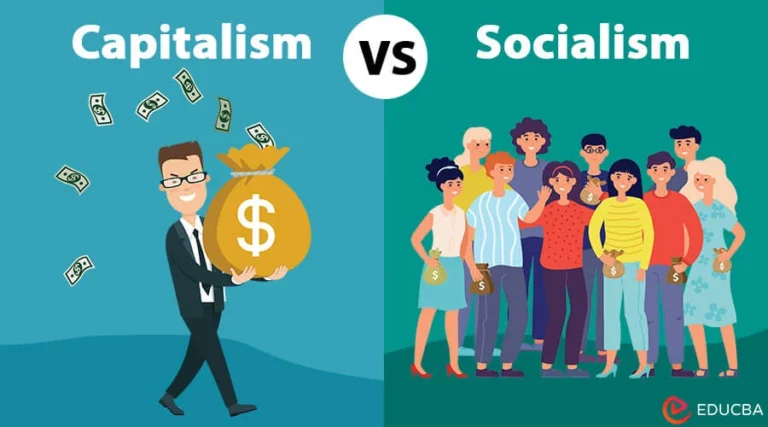
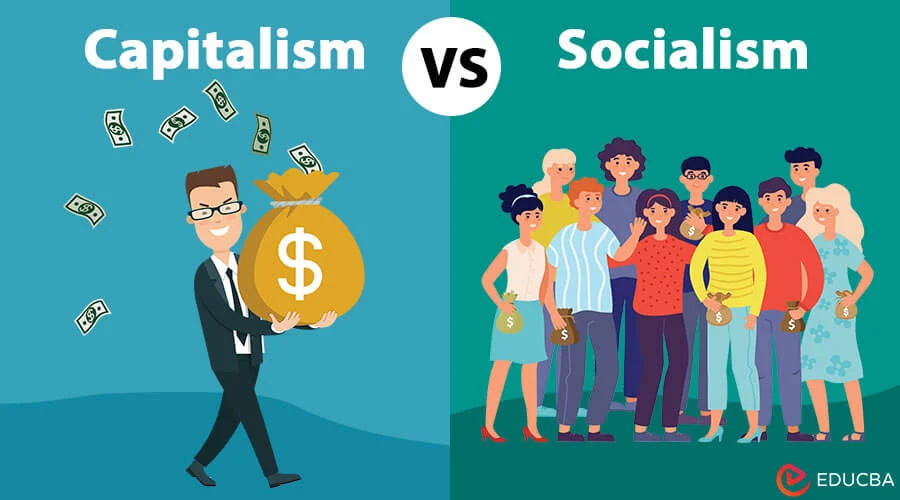
Every time the subject of socialism surfaces in American politics, a predictable maneuver appears. Progressive Democrats and self-described democratic socialists point to Social Security, the United States Postal Service, public libraries, and a roster of other familiar programs. “You already live with socialism,” the argument runs. “You like it. Stop pretending otherwise.”

This is not accidental. It is rhetorical gamesmanship designed to massage definitions, lower the emotional temperature of the word “socialism,” and shift the burden of proof onto critics. The tactic works because the programs in question are popular, long-standing, and woven into daily life. It fails as analysis because it collapses fundamentally different categories of government activity into one elastic label.
Classical Socialism Versus Ordinary Government
Classical socialism, in the tradition running from Marx through 20th-century experiments, centers on collective or state ownership of the means of production—factories, farms, banks, major industry—and the subordination of market allocation to political planning. Prices, investment, and the distribution of capital are decided by the state rather than by private owners responding to supply, demand, and profit signals. Historical examples include the Soviet Union, Maoist China, Castro’s Cuba, and various Eastern Bloc regimes. Outcomes varied in severity, but the core institutional feature was the same: the state, not private capital, directed the commanding heights of the economy.

American social services do not meet that test. They operate inside an economy still defined by private ownership of most productive assets, market pricing for the vast majority of goods and services, and capital formation driven by private investment. Conflating the two requires expanding “socialism” until the word loses distinctive meaning.
The Usual Suspects—and Why They Don’t Fit
Social Security is mandatory social insurance financed by payroll taxes on a pay-as-you-go basis. Current workers fund current beneficiaries. Benefits are progressive, creating redistribution from higher to lower lifetime earners, and the system includes disability and survivor protections. It has socialistic features—compulsion and formula-driven transfers—but it does not seize ownership of factories, farms, or businesses. It sits atop a capitalist labor market and private capital stock. Calling it socialism is like calling a progressive income tax the abolition of private property.
The United States Postal Service is a government-chartered enterprise with a legal monopoly on certain letter mail, rooted in constitutional authority and the practical need for national communication infrastructure. It competes with private carriers in packages and express delivery. State postal systems exist in virtually every developed country, capitalist and otherwise. Their existence does not convert an economy into a socialist one any more than a municipal water utility does.
Public libraries are classic local public goods: non-rival, difficult to exclude, and financed by taxes. Liberal societies have provided free access to books and information for generations without rejecting private property or markets. Libraries predate modern democratic socialism by a wide margin and require no theory of collective ownership of production.

Several other American institutions receive the same treatment:
- Public K-12 education is largely a state and local function aimed at producing a literate citizenry and workforce. Nearly every advanced economy funds basic schooling this way. It is not the nationalization of textbook publishing or the elimination of private schools.
- The interstate highway system is large-scale public infrastructure that reduces transaction costs for private commerce. Roads and bridges appear in capitalist, mixed, and socialist systems alike because they solve coordination problems markets handle poorly when exclusion is difficult.
- National parks and public lands preserve scenery and resources under government stewardship. Conservation of open space is compatible with private property regimes; it does not require collective ownership of industry.
- Fire and police departments supply local public goods that markets under-provide because free-rider problems are severe. Their existence is older than the modern welfare state and is not unique to any economic ideology.
- Medicare and Medicaid extend the social-insurance model into health care for the elderly, disabled, and low-income. They make government a dominant payer for specific populations while leaving hospitals, physicians, and pharmaceutical companies predominantly private. Single-payer advocates often want to go further; the current programs stop short of full socialization of medicine.
- Unemployment insurance and SNAP are more purely redistributive safety-net programs. They transfer resources according to need or temporary circumstance. Safety nets of varying generosity exist across capitalist democracies; their presence does not equate to state ownership of the means of production.

These programs share a common trait: they are either public goods, social insurance, infrastructure, or targeted transfers. None of them transfers title to the factories, farms, energy companies, or tech platforms that generate the bulk of national wealth. Treating them as proof of “existing socialism” is category error dressed up as gotcha politics.
The Motte-and-Bailey Pattern
The rhetorical structure is classic motte-and-bailey. When pressed on ambitious proposals—Medicare for All as a true government monopoly, large-scale industrial policy that directs capital, wealth taxes aimed at breaking private concentrations of ownership, or explicit attacks on “capitalism”—advocates retreat to the easily defended motte of libraries and Social Security. Once the pressure eases, the bailey of broader economic restructuring reappears. The association with popular programs does the political work of normalization while the harder questions about incentives, ownership, and historical performance remain under-examined.
Nordic countries are frequently invoked in the same breath. Those nations run generous welfare states and high taxes, yet their prosperity still rests on competitive private markets, strong property rights, and openness to trade and capital. They are mixed economies with large social-insurance systems, not socialist economies that abolished private ownership of production. Citing them to defend American social services while simultaneously advancing more radical ownership claims is another form of the same blur.
Counterpoints Conservatives Should Use
Precision is the most effective reply. Conservatives and classical liberals should refuse the expanded definition and insist on distinctions:
- Demand the classical meaning. Ask whether the advocate means collective ownership of the means of production or merely any government program that taxes and spends. If the former, the American examples do not qualify. If the latter, the word has been emptied of content and every mixed economy becomes “socialist” by fiat.
- Separate public goods and insurance from ownership. Libraries, roads, fire departments, and basic schooling solve free-rider and coordination problems. Social Security and Medicare are insurance-like arrangements with redistributive elements. Neither requires or implies state ownership of industry. Conflating them is rhetorical sleight of hand.
- Note historical and cross-national reality. These institutions predate the rise of contemporary American democratic socialism and appear across capitalist countries. Their popularity does not ratify a different economic philosophy. Pointing to them proves only that Americans accept limited government provision of certain services, not that they have endorsed socialism.
- Force specificity on the next steps. If libraries and the post office are the model, the debate is already over—both sides accept them. The real disagreement concerns proposals that go further: single-payer systems that crowd out private insurance, industrial policy that substitutes political allocation for market signals, or measures that treat private capital itself as the problem. Demand that advocates defend those policies on their own merits rather than resting on the popularity of existing services.
- Highlight incentives and trade-offs. Large pay-as-you-go entitlement systems face demographic and fiscal pressures. Public monopolies can become inefficient or unresponsive. Acknowledging the genuine public-goods rationale for some programs does not require ignoring the costs of expansion or the superior performance of markets in allocating capital and driving innovation.
- Reject the false binary. The choice is not “accept these programs or embrace pure laissez-faire.” Most Americans live comfortably with a mixed economy that includes public goods and social insurance while preserving private ownership and market allocation for the bulk of economic activity. The rhetorical pivot tries to erase that middle ground.
Language matters. When “socialism” is stretched to cover every tax-funded service Americans already accept, the term ceases to describe a distinct and historically consequential ideology. The better response is not to deny the existence or popularity of Social Security, the Postal Service, or public libraries. It is to refuse the blur, restore the classical meaning, and insist that further ambitions be argued honestly rather than smuggled in under the banner of institutions that never required socialism in the first place.
About the Author







![flag_final[2]](https://thenevadaconservative.com/wp-content/uploads/2026/07/12112-768x536.jpg)