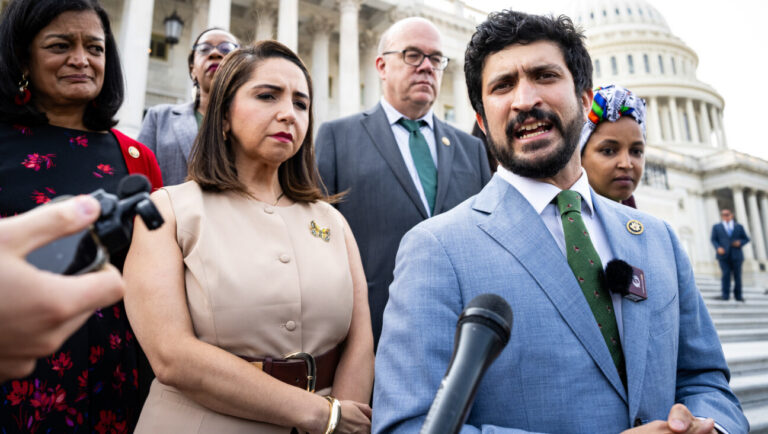
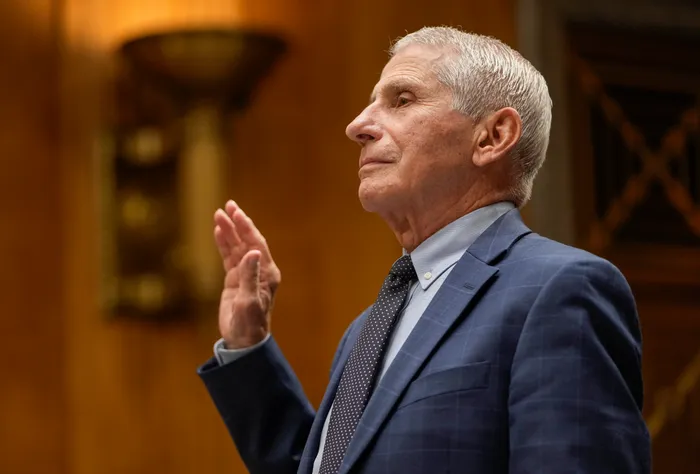
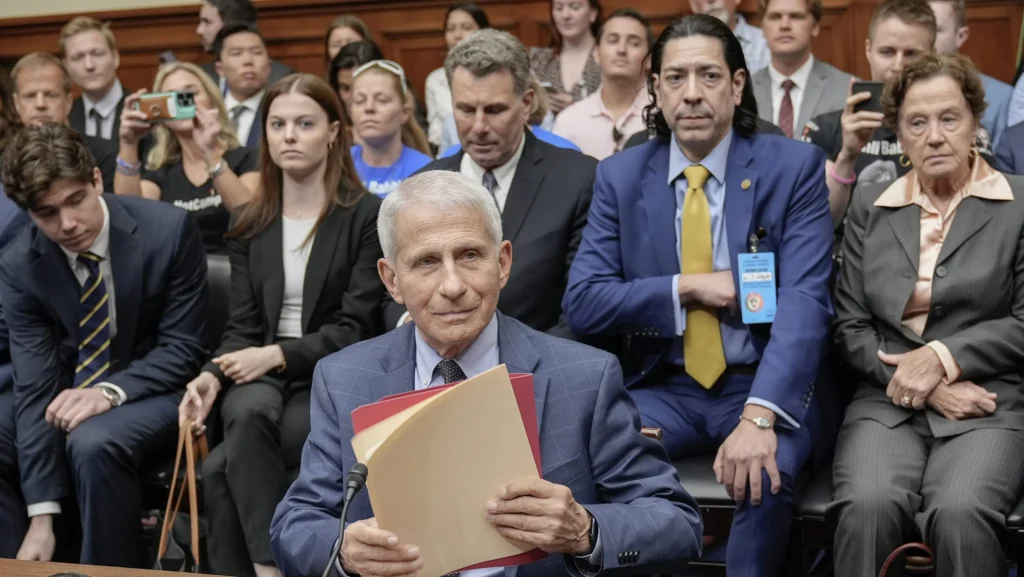
Washington, D.C.(TNVC News)-This morning in Washington, D.C., former National Institute of Allergy and Infectious Diseases Director Anthony Fauci sat before the Senate Homeland Security and Governmental Affairs Committee and invoked his Fifth Amendment right against self-incrimination more than 100 times. To nearly every question from Chairman Sen. Rand Paul (R-KY) and Republican colleagues, the answer was the same: on the advice of counsel, he would not answer.
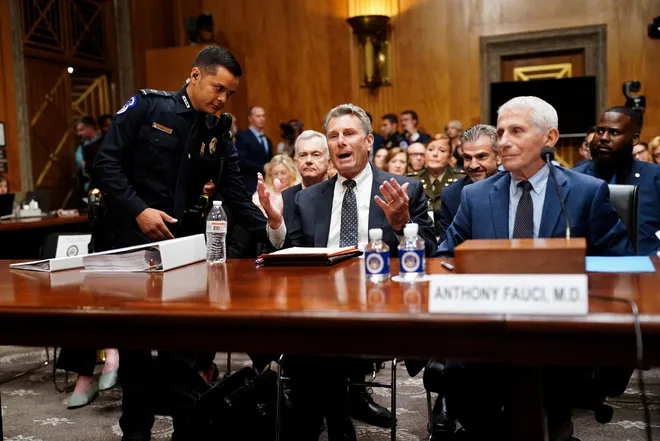
The hearing was no fishing expedition. It was a long-overdue effort to hold accountable the man who became the public face of America’s COVID response—the same response that shuttered businesses, closed churches and schools, separated families, and imposed sweeping mandates in the name of science. Paul subpoenaed Fauci after years of conflicting statements, and just days before the hearing released more than 1,100 pages of Fauci’s own pandemic-era diary entries. Those private notes painted a picture very different from the confident public pronouncements that guided governors, mayors, and media outlets for years.
Why the Hearing Happened—and Who Stood Where
The major players were clear. Sen. Rand Paul has spent years pressing Fauci on NIH funding of gain-of-function research at the Wuhan Institute of Virology, the lab-leak theory of COVID origins, and whether Fauci misled Congress under oath. Other Republicans joined in questioning the catastrophic costs of the policies Fauci championed. Democrats on the committee largely ran defense, framing the hearing as a politically motivated “gotcha” exercise and an attempt to settle old scores rather than seek truth.
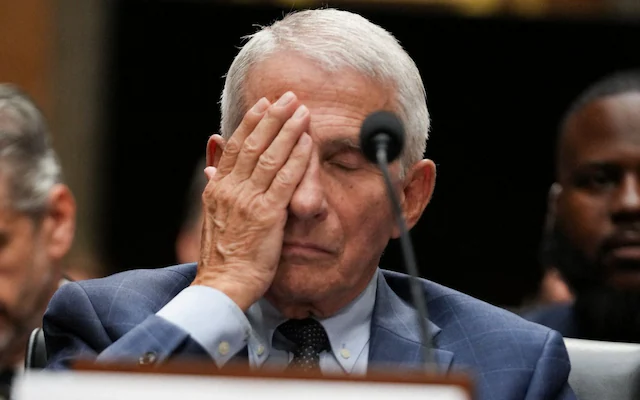
Fauci himself accused Paul of an “unhinged obsession” and claimed the only purpose of the hearing was to trap him into statements that could land him “behind bars.” He noted he had testified many times before and that it “pained” him to take the Fifth—yet he did so repeatedly.
What Fauci Was Accused Of
At the heart of the accusations is the charge that Fauci helped fund risky coronavirus research in China through EcoHealth Alliance, then downplayed the possibility that COVID-19 escaped from a lab while privately acknowledging serious doubts about a natural origin. Diary entries show that as early as January 2020, Fauci wrote that the Wuhan wet market “was not the source, it was the amplifier,” and that on a key February 2020 conference call, most scientists present believed deliberate insertion of genetic material was possible. Publicly, the narrative pushed was natural origin and that lab-leak talk was a conspiracy theory.
Critics further accuse him of driving lockdowns and school closures while later claiming he never recommended them, of promoting mask mandates of questionable efficacy for the general public, and of participating in a climate of fear that pressured millions into experimental vaccines and endless boosters.
Who Paid the Price
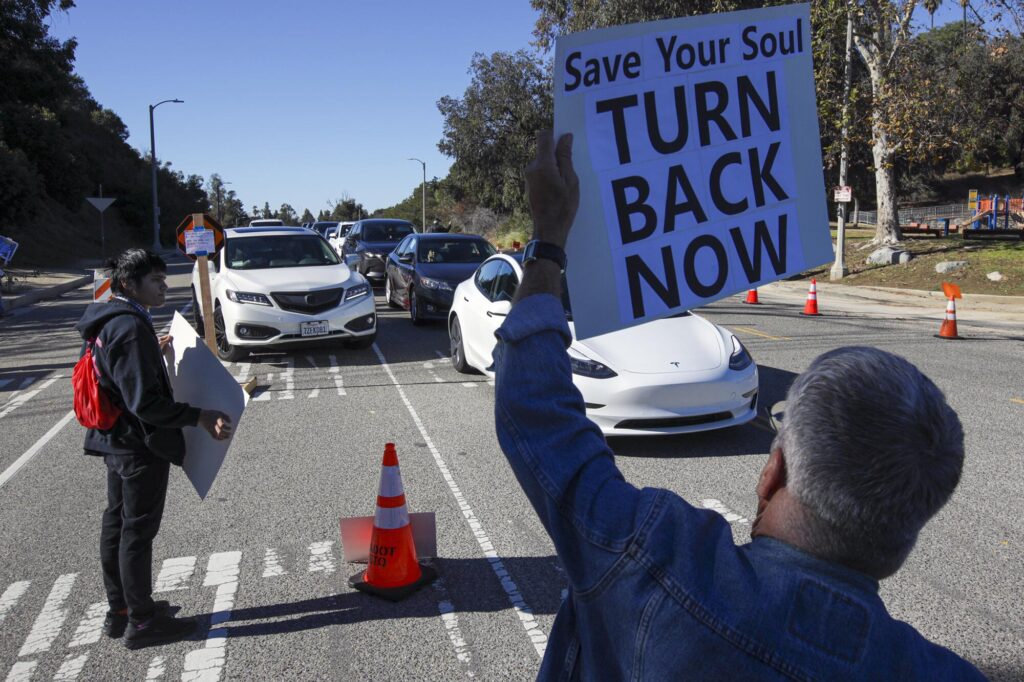
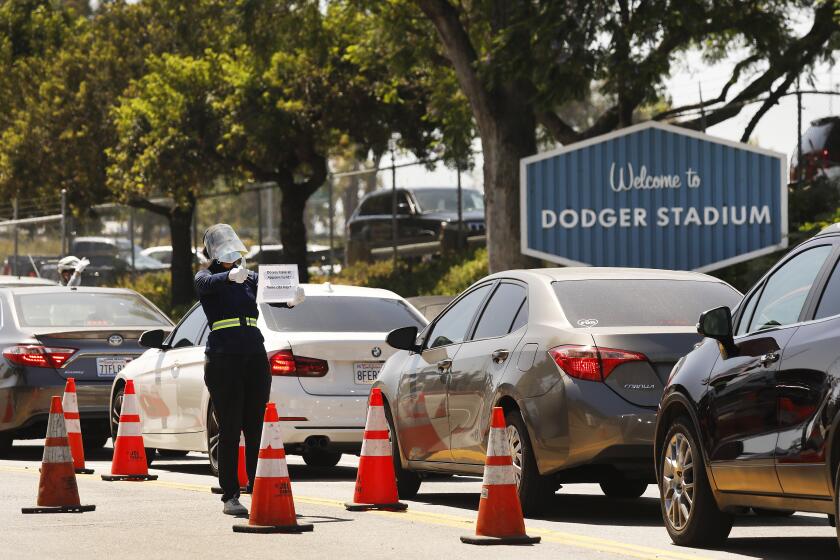
COVID-19 itself claimed lives, disproportionately among the elderly and those with serious underlying conditions. But the response exacted a far broader toll. Families lost livelihoods when small businesses were ordered closed. Children lost critical years of learning and social development as schools stayed shuttered—costs measured in the trillions in future earnings and well-being. Churches were treated as non-essential while big-box stores remained open. Mental health crises, delayed cancer screenings, and social isolation compounded the damage. The world was told to “follow the science,” yet the science kept changing, and dissent was often labeled dangerous misinformation.
Did Fauci Believe the Virus Was as Deadly as Advertised?
His own diary entries reveal a man acutely aware of his rising celebrity—“the most famous and talked about person in the country”—even as he privately noted early data showing the market was not the origin and that asymptomatic spread was already occurring. He took personal credit in private notes for convincing New York City’s mayor to close schools and for pushing broader lockdown measures, while later public statements often distanced him from those very policies.
Masks, Media, and Manufactured Fear
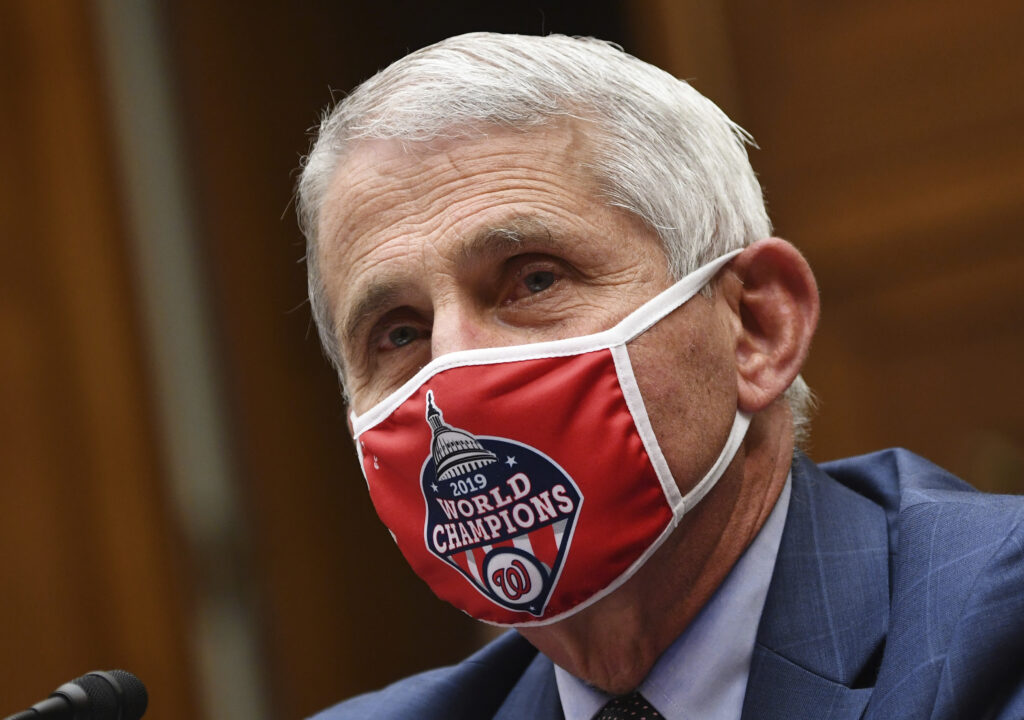
Mask mandates became a badge of compliance more than a rigorously proven public-health tool for healthy people in community settings. The same media outlets and public health officials who amplified worst-case models and daily death counts rarely gave equal time to natural immunity, early treatment options, or the age-stratified risk profile of the virus. Fear sold. Compliance was demanded. Questions were discouraged. Many conservatives watched this unfold and concluded that government agencies and legacy media had abandoned transparent risk communication in favor of narrative control.
Democrats continue to shield Fauci. They portray scrutiny as persecution and treat the Fifth Amendment invocation as reasonable self-protection rather than a red flag after years of high-profile testimony. The preemptive full and unconditional pardon issued by President Biden in January 2025 covering Fauci’s official acts from 2014 through early 2025 has not satisfied Republican questions about potential perjury in prior sworn statements or the implications of new testimony.
Why Take the Fifth After a Pardon?
If the record is clean and the science was followed, why not answer under oath? Fauci and his attorneys clearly feared that any new statements could be used to allege inconsistencies with earlier testimony. Taking the Fifth is a constitutional right, and Americans should defend that right even for public figures they distrust. But the spectacle of the nation’s former top infectious-disease official refusing to discuss the most consequential public-health episode in a generation only deepens the damage.
Trust Has Been Broken
Public confidence in the CDC, NIH, and the broader public-health establishment has been severely harmed—especially among the very citizens who value constitutional limits, parental rights, religious liberty, and honest risk assessment. When officials appear more concerned with protecting institutional narratives than with transparent accountability, faith in those institutions collapses. America remains the world’s last best hope, but that hope requires institutions that tell the truth, admit mistakes, and respect the people they serve.
The questions Rand Paul and others asked today still lack answers. Fauci’s silence does not close the book. It only confirms that the American people deserve better than the performance they witnessed this morning.
About the Author




![flag_final[2]](https://thenevadaconservative.com/wp-content/uploads/2026/07/12112-768x536.jpg)