
President Donald Trump is scheduled to speak this morning at the National Prayer Breakfast, continuing a long-standing American tradition that brings together faith leaders, elected officials, and dignitaries from across the nation and around the world.
The National Prayer Breakfast has, for decades, served as a rare moment of unity in Washington—a time when politics is intentionally set aside in favor of reflection, humility, and acknowledgment of the role faith has played in the life of the nation. Presidents from both parties have participated, recognizing that moral leadership and spiritual grounding remain essential to public service.
A Tradition Rooted in America’s Faith Heritage
First held in the early 1950s, the Prayer Breakfast was founded on the belief that leaders govern best when they understand their accountability extends beyond voters and polls—to God Himself. It reflects a deeply American understanding: that liberty is not self-sustaining and that freedom flourishes only when anchored to moral truth.
President Trump’s participation underscores his administration’s continued outreach to the faith community, particularly evangelical Christians, Catholics, and people of faith who view religious liberty not as a private preference, but as a foundational American right.
Faith, Leadership, and the Public Square
Throughout his presidency, Trump has consistently spoken about the importance of faith in shaping values, resilience, and national character. His appearance at the Prayer Breakfast signals not only respect for tradition, but also recognition of the faith community’s role in strengthening families, communities, and civic life.
At a time when religious expression is increasingly marginalized in public discourse, events like the National Prayer Breakfast stand as a reminder that faith has always had a seat at America’s table.

Why This Matters
For millions of Americans, faith is not an accessory—it is central to how they understand duty, service, and freedom. A president’s willingness to stand before the nation’s faith leaders and speak openly about God, prayer, and moral responsibility sends a powerful signal at home and abroad.
In a divided era, the Prayer Breakfast remains one of the few moments when leaders are encouraged not to argue policy, but to examine conscience.
Looking Ahead
While policy battles will resume and political divisions will persist, today’s address offers a brief but meaningful reminder of something older and steadier than politics: the belief that this nation’s strength ultimately rests not in government alone, but in faith, character, and humility before God.
As one past president famously observed, America is strong because its people are strong—and its people have long been a praying people.
Same Events, Very Different Meaning: How Presidents Engage the Faith Community
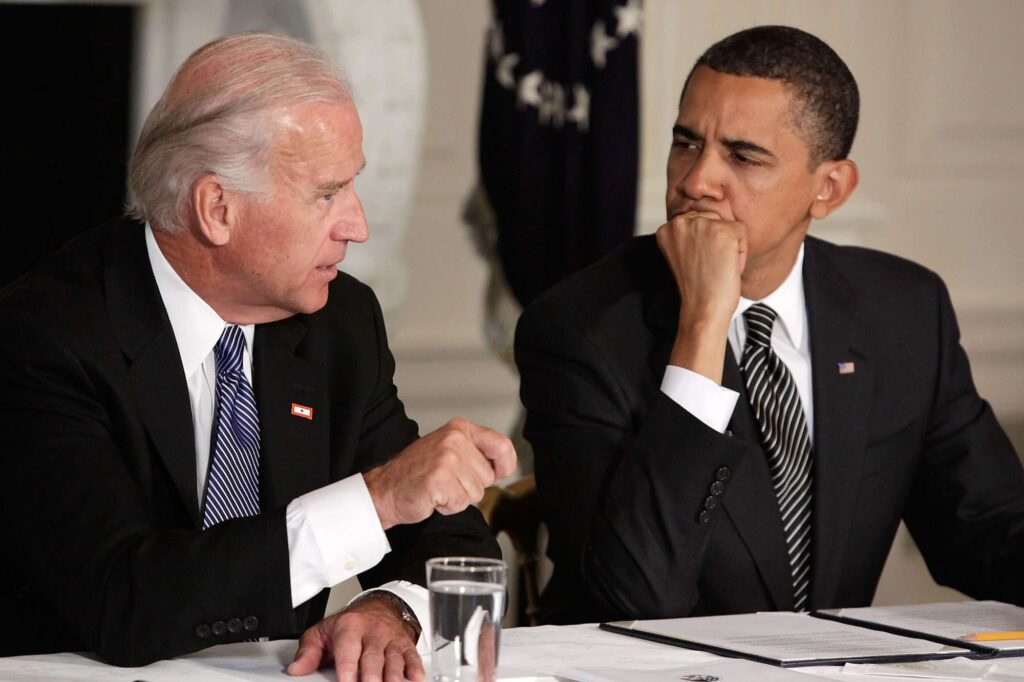
Americans often hear that presidents “all attend the same faith events,” such as the National Prayer Breakfast. That statement is technically true—but deeply incomplete.
Attendance tells only part of the story. Intent, tone, and follow-through matter far more.
Barack Obama
- Attended the National Prayer Breakfast annually
- Framed faith primarily as personal reflection and interfaith dialogue
- Emphasized tolerance and pluralism over doctrine
- Kept faith largely separate from policy decisions
Bottom line: Faith was acknowledged—but intentionally kept private and non-directive in governance.
Joe Biden
- Attended Prayer Breakfasts and Catholic events
- Spoke openly about personal faith and prayer
- Advanced policies that often conflicted with traditional Christian teachings
- Viewed faith as personal identity, not a public guidepost
Bottom line: Faith was expressed—but policy operated on a parallel track.
Donald Trump
- Attended and elevated faith-centered events
- Publicly affirmed religious liberty as a foundational American right
- Appointed judges and advanced policies aligned with faith-based concerns
- Treated faith as a public good, not just a private belief
Bottom line: Faith was not only respected—it was defended and integrated into public life.

Why This Difference Matters
To many Americans—especially churchgoing families—faith is not a weekend ritual or a personal coping mechanism. It is a moral framework that informs views on:
- Life
- Family
- Freedom
- Responsibility
- The role of government
When presidents attend the same events but mean different things by their presence, voters deserve to understand that distinction.
This is not about who prayed harder.
It’s about whether faith is honored, sidelined, or protected in the public square.
And once people see the difference, they rarely unsee it.
About the Author