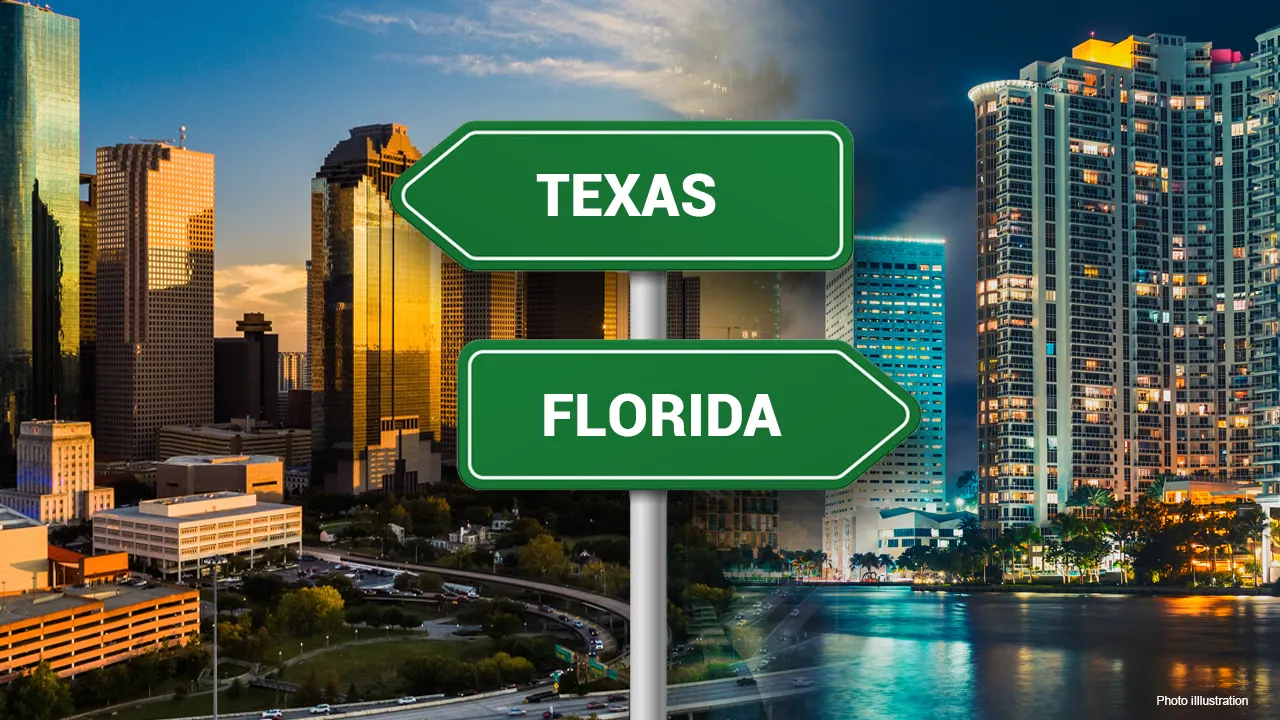
America is on the move again—and the direction is unmistakable. For the better part of a decade, and especially since 2020, millions of Americans have packed up and left Democratic-controlled “blue” states for Republican-led “red” ones. California, New York, Illinois, New Jersey, and Massachusetts keep hemorrhaging residents. Texas, Florida, the Carolinas, Tennessee, Georgia, Arizona, Idaho, Utah, and even smaller states like Alabama and Arkansas keep gaining them.
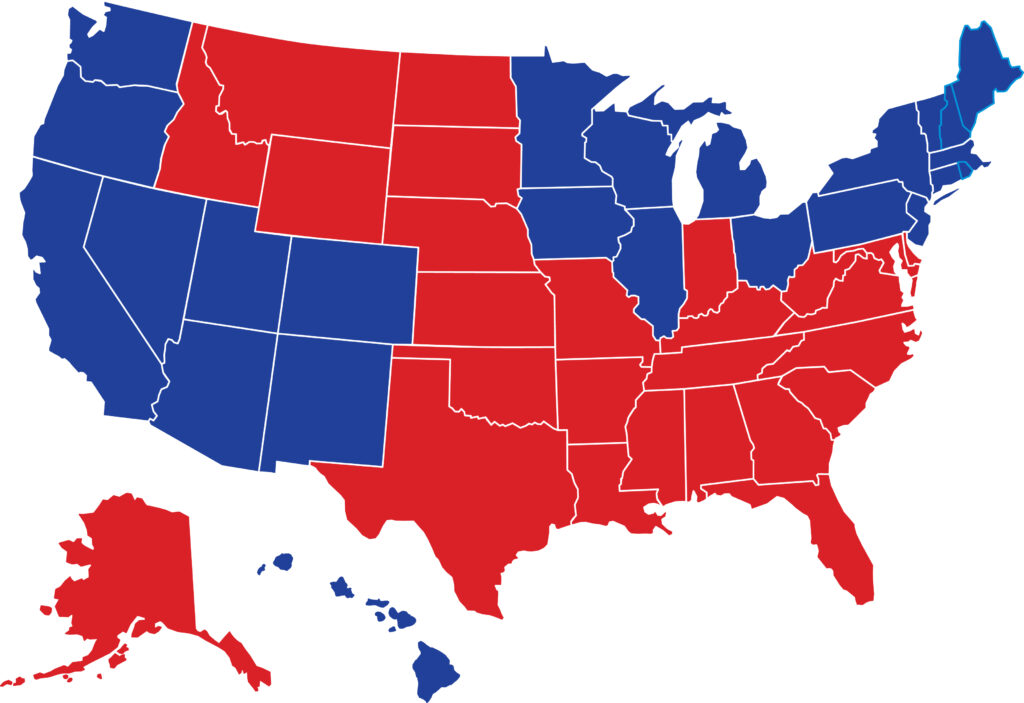
This is not random. It is the largest sustained internal migration of its kind in modern American history, and it is driven by clear, measurable differences in taxes, costs, freedom, and quality of life.
The Numbers Don’t Lie
Between 2020 and 2025, blue states lost roughly 3.8 million people through net domestic migration. Red states gained about 3.3 million. In 2025 alone, blue states still saw a net domestic outflow of nearly 480,000 people while red states posted a net gain approaching 400,000.
California has lost well over a million residents to other states in recent years. New York and Illinois have followed close behind. Meanwhile, Texas and Florida absorbed the lion’s share of those movers for years (though inflows have cooled somewhat as housing and insurance costs rose in those destinations). North Carolina, South Carolina, Tennessee, and the Mountain West states continue strong relative gains.
The money is moving too. IRS data shows billions of dollars in taxable income leaving high-tax coastal counties and landing in lower-tax Sun Belt and Southeastern states. Economist Stephen Moore has called it “the greatest wealth transfer in the history of the United States.” The people leaving are not just the poor or the young—they include middle-class families, professionals, and high earners who can no longer justify the cost of staying.

Why They’re Leaving
The reasons are consistent across surveys, IRS migration files, Census estimates, and the lived experience of the people making the move:
Taxes. This is the single biggest driver. Several major blue states impose state income taxes of 9–13% or higher on top of federal taxes. Florida, Texas, Tennessee, Nevada, and a handful of other states impose zero. When a family or business can keep thousands—or tens of thousands—more of what they earn simply by changing their address, the math becomes decisive.
Housing and Cost of Living. Coastal blue metros have some of the highest housing costs in the nation, driven by restrictive zoning, endless environmental reviews, and anti-growth policies. Red and purple Sun Belt states have generally allowed more building. The difference in monthly mortgage or rent payments is often the deciding factor for young families.
Regulation and Business Climate. Blue states layer on labor rules, energy mandates, and permitting delays that raise the cost of everything from electricity to groceries to hiring. Red states tend to be more competitive on these metrics. Remote work after 2020 simply made it easier for people and companies to act on those differences.

Schools and Culture. Parents are voting with their feet on education. Many cite curriculum, school safety, and declining academic performance as reasons for leaving. States that expanded school choice, protected parental rights, and focused on core academics have become magnets. Cultural discomfort—over crime policies, public disorder, or ideological pressure in institutions—also plays a role for a significant share of movers.
Public Safety and Quality of Life. Soft-on-crime policies in some major blue cities produced visible disorder. People noticed. Safer streets, cleaner public spaces, and a sense that local government is focused on basic competence rather than progressive experiments have real appeal.
Nevada’s Place in the Shift
Nevada has quietly benefited. The state has no personal income tax, a relatively business-friendly environment, and a growing population. Clark County continues to draw inbound residents, including many from California. For a state that has long lived with the boom-and-bust cycles of tourism and construction, the arrival of new households and tax base is a net positive—provided we protect the advantages that attract them in the first place.
The broader lesson for Nevada policymakers is straightforward: keep taxes low, keep government focused on core services, expand educational opportunity, and avoid importing the very policies that are driving people out of California and New York.

The Political Stakes
This migration will reshape the congressional map after the 2030 Census. Projections based on current trends show Texas and Florida each gaining multiple House seats, with additional gains for states such as Arizona, Georgia, North Carolina, Idaho, and Utah. California is projected to lose three to five seats; New York and Illinois are likely to lose seats as well. The net result is a shift of roughly eight to twelve House seats—and the same number of Electoral College votes—toward states that currently lean Republican.
That structural change will matter for presidential elections starting in 2032. Democrats will find it harder to rely solely on the traditional Northeast and West Coast base plus the industrial Midwest “Blue Wall.” Republicans will start with a modestly stronger Electoral College baseline. Neither party should treat the shift as permanent destiny. Destination states can still be won or lost based on how well they govern the people who arrive.

A Free People Choosing Differently
At its core, the Blue State Exodus is a free people exercising one of America’s oldest rights: the right to leave a jurisdiction whose policies they no longer find tolerable. High taxes, high housing costs, declining schools, and progressive governance experiments have produced measurable results. Americans have responded by moving.
The states that keep winning this competition share a common set of advantages: lower tax burdens, greater economic freedom, more responsive local government, and a culture that still prioritizes families, work, and ordered liberty. Those are not “red” or “blue” values. They are American ones.
Nevada sits in a position of strength if it remembers that truth. The migration will continue as long as the policy differences remain. The only question is whether the states people are leaving will finally learn why their citizens are walking away.
About the Author