There was a time in America when the phrase “no one is above the law” actually meant something. Laws were debated, passed, enforced — and obeyed, whether one agreed with them or not. Today, that principle is being tested in real time.
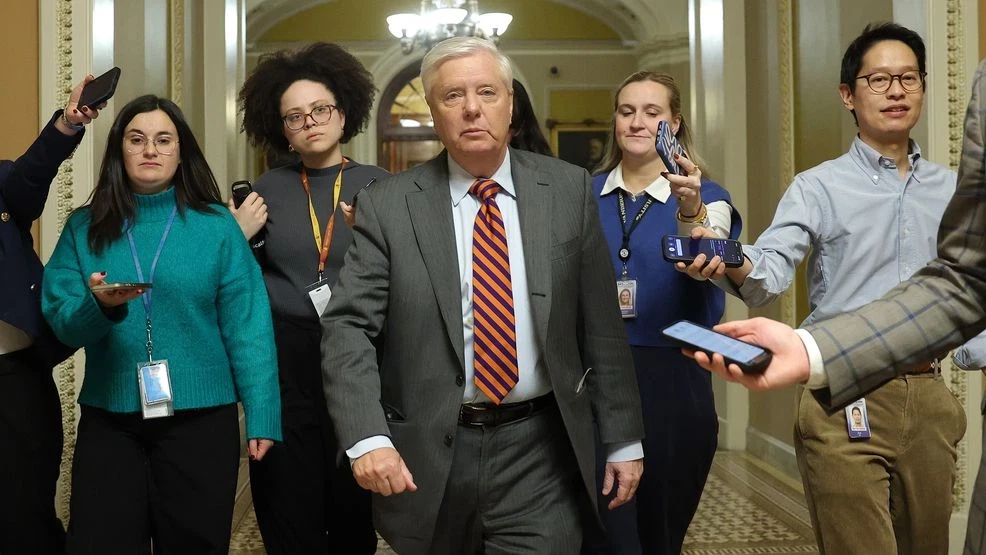
That is why recent remarks by Lindsey Graham, calling for legislation that would hold sanctuary state governors and mayors criminally accountable for refusing to comply with federal immigration detainer requests, deserve serious consideration — not dismissal.
This is not about political vendettas. It is about restoring the rule of law.
What Is the Issue, Really?
At the heart of the sanctuary debate is a simple but profound question:
Can state and local officials openly defy federal law without consequence?
Federal immigration law is not ambiguous. Immigration enforcement is a federal responsibility, grounded in the Constitution and reinforced by decades of statute and case law. When Immigration and Customs Enforcement (ICE) issues a lawful detainer request, it is not a suggestion — it is a request rooted in federal authority.
Yet sanctuary jurisdictions routinely ignore those detainers, releasing individuals who are in the country illegally — sometimes with criminal histories — back into the public.
This is not passive non-cooperation. It is active obstruction.
Why Graham’s Proposal Matters
Sen. Graham has argued that governors and mayors who knowingly refuse to honor federal detainers should face personal criminal liability, including potential jail time. That is a dramatic shift — and intentionally so.
For years, sanctuary officials have hidden behind policy language, legal ambiguity, and the assumption that there would never be consequences. At worst, they risked losing federal grant money. At best, they scored political points.
What Graham is proposing changes the equation entirely:
- No more institutional shielding
- No more passing responsibility downstream
- No more pretending defiance is compassion
If an official knowingly releases an illegal alien after a federal detainer has been issued, the argument is that they are no longer making a policy choice — they are obstructing federal law.
The Constitutional Foundation
The Supremacy Clause of the U.S. Constitution is clear: federal law is supreme. States do not get to nullify it through local policy, nor do mayors get to veto it with press conferences.
Supporters of sanctuary policies often argue that local governments cannot be “forced” to enforce federal law. That argument misses the point.
No one is demanding that local police become federal agents. What is being demanded is far more basic:
Do not interfere when the federal government is lawfully doing its job.
There is a world of difference between declining to assist and deliberately blocking enforcement.
Public Safety Is Not a Talking Point
Too often, this debate is framed as abstract or ideological. It is not. Families across the country have buried loved ones because sanctuary policies resulted in repeat offenders being released instead of removed.
When ICE detainers are ignored, the consequences are not theoretical. They are measured in victims’ names, court dates missed, and crimes that never should have happened.
Government’s first responsibility is public safety. Any policy that knowingly compromises that responsibility deserves scrutiny — and accountability.
What This Would Mean Going Forward
If legislation along the lines Graham suggests were passed, it would fundamentally change the sanctuary landscape:
- Officials would be forced to choose between ideology and legality
- Federal law would regain its authority
- Detainers would be taken seriously again
- The phrase “sanctuary” would no longer function as a shield from consequences
This is not tyranny. It is governance.
A Republic Cannot Survive Selective Obedience
America was not built on feelings. It was built on laws, covenants, and the understanding that disagreement does not equal disobedience.
When elected officials decide which laws they will follow and which they will ignore, they are no longer public servants — they are gatekeepers of chaos.
Sen. Graham’s call is not radical. It is corrective.
Because in a constitutional republic, the law must mean something — or eventually, it will mean nothing at all.
As our grandparents understood:
Liberty requires order. Order requires law. And law requires courage to enforce it.
About the Author