Every February, America pauses—at least briefly—to acknowledge Black History Month. Schools, media outlets, and institutions highlight African American achievement, resilience, and progress. We hear about inventors, entrepreneurs, artists, athletes, and trailblazers who overcame adversity and left an undeniable mark on our nation.
Those stories matter. They inspire. They should be told.
But Black history is far bigger—and far deeper—than a handful of familiar names or classroom-friendly anecdotes. It is not complete without grappling with political courage, moral conviction, and the blood-soaked cost of ending slavery in America. It is not complete without acknowledging which political movement was born to oppose slavery, which party fought a Civil War to destroy it, and which party helped usher formerly enslaved Black Americans into elected office for the first time in U.S. history.
That party was the Republican Party.
To tell this story honestly is not to engage in nostalgia or partisan spin. It is to honor truth, context, and memory—especially at a time when history is too often simplified, sanitized, or selectively edited. Black History Month should not merely celebrate personal success stories; it should also remind us of the ideals, sacrifices, and alliances that helped make freedom possible.
The Birth of the Republican Party: An Anti-Slavery Movement
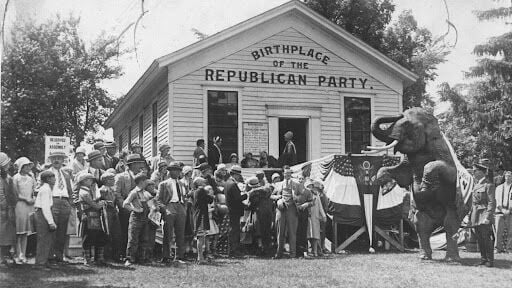
The Republican Party was founded in 1854, not as a party of convenience, but as a party of conscience. Its creation was a direct response to the Kansas–Nebraska Act, which allowed new territories to decide for themselves whether slavery would be legal. This act effectively reopened the door for slavery’s expansion westward and outraged Americans who believed the institution was morally indefensible.
The early Republican coalition consisted of abolitionists, Free Soilers, former Whigs, and anti-slavery Democrats—men and women united by a single overriding belief: slavery was a moral evil that must not be allowed to expand and must ultimately be destroyed.
At a time when opposing slavery invited ridicule, violence, and political isolation, Republicans embraced the label that others used as an insult: the anti-slavery party.
This was no small stance. Slavery was deeply embedded in the American economy, protected by law, and enforced by violence. To oppose it meant challenging entrenched power, social norms, and economic interests across much of the nation. Yet Republicans pressed forward—not because it was easy, but because it was right.
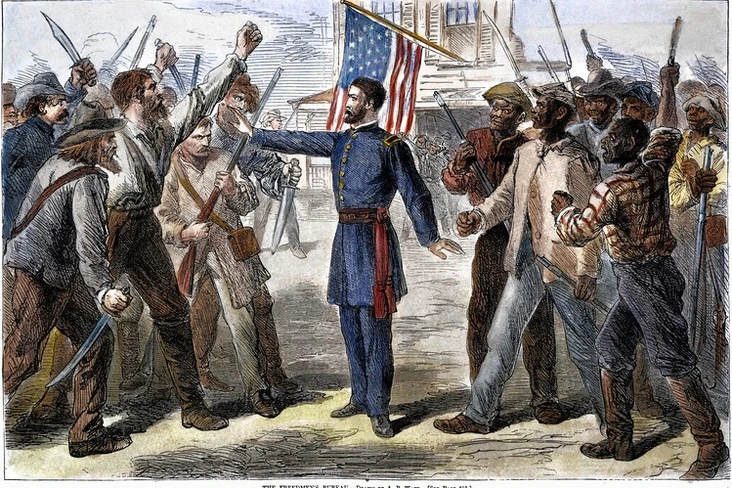
Abraham Lincoln and the Moral Crisis of the Union
The rise of the Republican Party reached its defining moment with the election of Abraham Lincoln in 1860. Lincoln was not an abolitionist radical in the modern caricature, but he was unwavering in one belief: slavery was incompatible with the principles of the Declaration of Independence.
Lincoln understood what many today forget—the Civil War was not merely a political dispute; it was a moral reckoning. Could a nation founded on the idea that “all men are created equal” continue to exist while holding millions in bondage?
Southern states answered by seceding. Republicans answered by defending the Union.
Lincoln’s leadership during the war—and his issuance of the Emancipation Proclamation—transformed the conflict from a fight to preserve the Union into a fight to destroy slavery itself. This decision reshaped American history and permanently altered the meaning of freedom.

The Civil War: The Price Paid to End Slavery
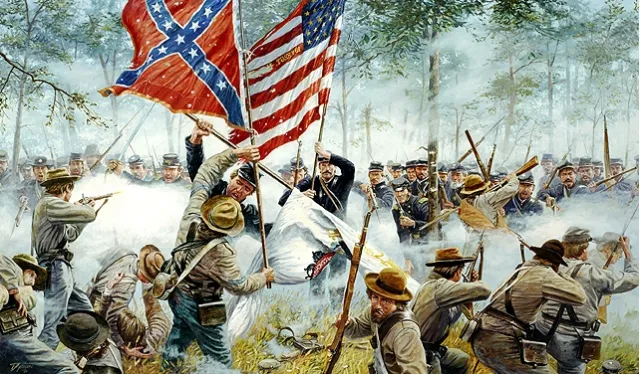
The cost of ending slavery was staggering. Approximately 620,000 to 750,000 American lives were lost during the Civil War—more than in any other conflict in U.S. history. Families were shattered. Towns were destroyed. A generation was scarred.
These deaths were not abstract statistics. They were the sons of farmers, laborers, immigrants, and formerly enslaved men who donned Union uniforms believing that the cause of liberty was worth their lives.
Over 180,000 Black soldiers served in the Union Army and Navy. Many were former slaves. They fought not only against the Confederacy, but against the doubt—sometimes even within their own ranks—that they were worthy of freedom or citizenship.
Their courage helped turn the tide of the war and laid the foundation for Black political participation in America.
Reconstruction and the First Black Elected Officials
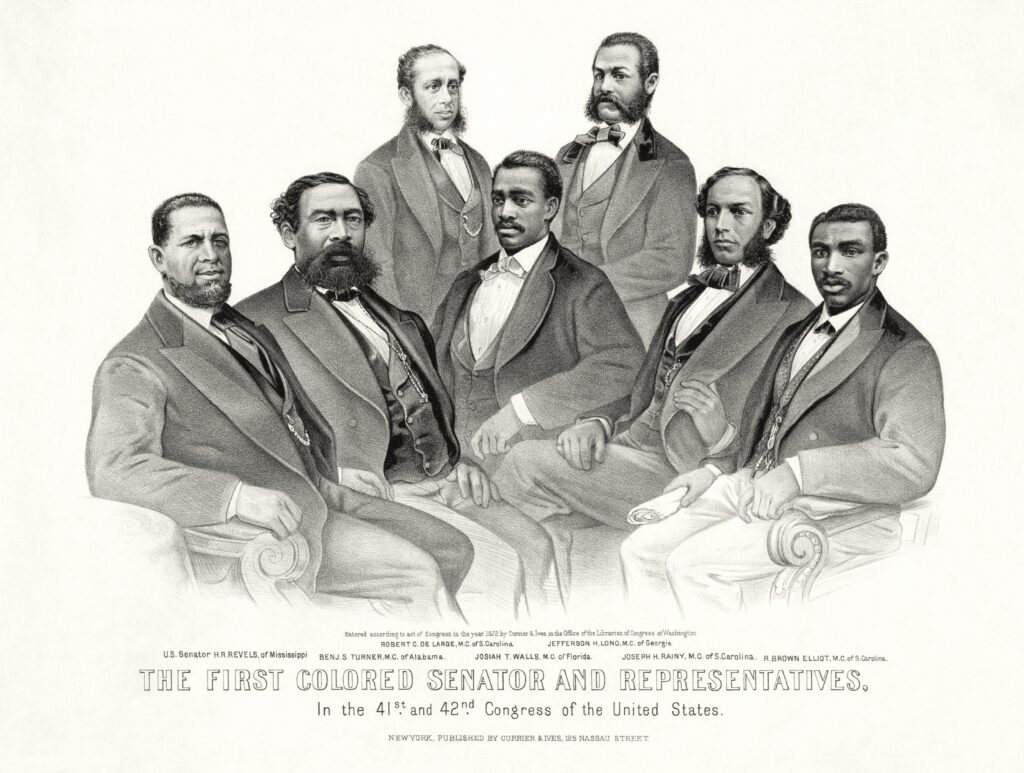
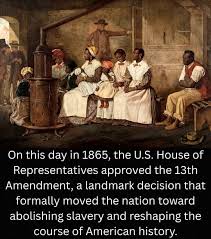
With the Union victory came Reconstruction, a period of rebuilding the nation and redefining citizenship. Republicans led this effort, pushing through the 13th, 14th, and 15th Amendments, which abolished slavery, guaranteed equal protection under the law, and secured voting rights for Black men.
For the first time in American history, formerly enslaved people and free Black citizens were elected to public office.
Among them was Hiram Revels, the first African American U.S. Senator, and Robert Smalls, a former slave who became a Congressman and a national symbol of Black leadership.
Every one of these early Black elected officials was a Republican.
They were not tokens. They were lawmakers, reformers, and statesmen who helped write laws, establish schools, and protect civil rights in the face of violent opposition.
The Forgotten Alliance Between Black Americans and the GOP
For nearly a century after the Civil War, Black Americans overwhelmingly identified with the Republican Party—not because of slogans, but because of lived experience. The GOP had fought to free them, enfranchised them, and defended their rights during Reconstruction.
It was Republicans who:
- Ended slavery
- Passed the Civil Rights Amendments
- Protected Black voting rights during Reconstruction
- Elected the first Black leaders in America
This alliance is often omitted from modern retellings of history, replaced with oversimplified narratives that begin long after Reconstruction and skip the uncomfortable truths of party realignment and political betrayal.
Black history deserves better than selective memory.

Black History Is American History
Black History Month should not shrink history to trivia or safe talking points. It should remind us that freedom was fought for, that alliances mattered, and that political courage changed the course of history.
The Republican Party of its founding era stood shoulder to shoulder with Black Americans at one of the most perilous moments in our national life. Together, they confronted slavery, preserved the Union, and moved America closer—however imperfectly—to its founding ideals.
Remembering that truth does not erase later failures or complexities. It simply honors reality.
As we reflect this month, let us remember not only who succeeded, but who fought, who bled, and who believed that America could become something better than it was.
That, too, is Black history.
About the Author